Carol Brown, Victoria College of Arts, University of Melbourne
Tia Reihana-Morunga, Waipapa Taumata Rau, University of Auckland
The stale breaths of colonial forbearers have left their stench.
This two-breathed poetic-essay emerges from the convergence of Indigenous and settler practices of knowing, feeling, and moving. Written from Aotearoa (New Zealand) and Naarm (Melbourne), Weatherlands for Sky & Bones draws from a cross-cultural, transdisciplinary collaboration in performance philosophy. As an experimental mode for thinking through performance, we explore a praxis of weatherlands. Writing as choreographers, educators, and custodians of embodied practice, Carol, of Pākehā (settler) heritage in diaspora, and Tia, of Ngāti Hine and Māori descent, we think together through the poetics of air, atmosphere, and ancestral presence specific to this part of the world.
Weather leaves its mark on landforms, plants, trees, animals, and people. We can feel it, and we are touched by it. A strong westerly wind may go deep into the bone. The sky reveals its shifting character. As the Crowded House song goes, we experience “four seasons in one day” (1991). Alexandra Harris (2015) describes ‘weatherland’ central to the cultural of history of Britain. The isles’ relationship to weather is at a turning point in history. We look at the sky for the coming storm. We need to attune to the heterogeneity of weather-cultures. In appropriating this term within the context of Aotearoa and Naarm, we acknowledge our entangled relations with weather systems from the Southern Hemisphere, where winds move in a different direction, there is more ocean than land mass, and seasons are in opposition to those of the North.
Our ongoing practice research and partnership attends to our mutual interest in dance as an artistic resource for navigating the present and contributing to a future that is liveable. Written in two parts, an introduction to the concept of weatherlands, its antecedents, informants, and animacies, is followed by a second section where our voices alternate as a polyrhythmic text. This second part of our writing is an adaptation from a performance lecture presented at the Inventing the Human Conference, University of Melbourne (2023), a conference that explored the concept of the human within Enlightenment and Romantic thought. Based upon a score developed through online workshops, we alternate roles as speaker and mover. Traces of our movements are held in the bones of the second part of this writing. Moving in the wake of a humanism predicated on a universal notion of subjectivity, we search for a more expansive notion of humanity—a wild dialect—at the interstices and in the intervals between breaths, animacies, ancestors, and atmospheres.
Practising relays of attention—between voices, languages, weathers, and bodies—we invite reading these performance remains as weatherlands. Initiated through our mutual desire to dance out of the question of what it means to be human in a time of climate breakdown, whilst acknowledging cultural loss, we catalyse the possibility, after Goat Island (2013), of performance as repair within a context of decentering colonialism and the shoots of reconciliation. This creative labour follows the arrow of breath as aroha. Aroha is a Māori concept often translated as “love”, but it encompasses a deeper ethic of care, compassion, empathy, and respect grounded in relational responsibilities. It derives from aro (to turn toward, to focus) and hā (breath, vital essence), signifying an attentiveness to the life force of others.
Kāi Tahu scholar Phillip McKibbin (2019) calls for a ‘politics of love’, grounded in an ethics of care in upholding the values of aroha in community. In recognising the interdependencies between animacies of air, earth, water, plants, animals, and each other, our dance follows circular pathways, spiralling into rounded shapes and unfurling gestural patterns that reach beyond ourselves.
Reorienting towards weatherlands for sky and bones, we attend to the weather as a dance partner. Tasting and testing the air, what is ancestral and sacred confronts knowledge accrued through years of teaching, training, and performing embodied ways of knowing for studio and stage. We bear the marks of the grounds we have danced barefoot upon in our musculature patterns, our fascia, and the pliability of feet weathered from dancing on sand, earth, wood and, marley. We carry a sense of space around our bodies conceived through patterns acquired in the many dance classes, toi rongoā, and other embodied landscapes we have participated in.[1] And yet, the stale air of the bare volume dance studio also prescribes a certain limit in our capacity to feel the presence of breath of life, hau, hauora, and the winds that blow through us.[2]
The weather that dances us is influenced by Antarctic storm patterns, cool ocean temperatures, currents, and the shape of the maunga (mountains) that sculpt the wind. The prevailing wind in Aotearoa comes from the West (Mullan et al. 2009). Exposed to prevailing winds and storms on the East Coast of the North Island, parts of Tāmaki Makarau (Auckland), including Karekare,[3] are still recovering from Cyclone Gabrielle in February 2023. In Naarm (Melbourne), freak storms, heat waves, and sudden drops in temperature of more than 20 degrees Celsius are familiar territory within a city that is re-embracing the Kulin Nations calendar of seven seasons. The shapes of the weather we are in inform the arā (path) of our choreography. We move-with these currents (of air and ideas), not as their originators, or inventors, but as their inheritors. In countering the stale breaths of our ancestors, we dwell in the body within the body. Our movements belong to a choreography older than us, an ancestral composition inscribed in winds, tides, and the sweep of constellations. We practice being breathed.
To live is to be weathered.
(Harris 2015, 114)
The concept of weatherlands arrives in and through our performance-making. It names a relational terrain in which body, breath, humidity, atmosphere, story, and environment are inseparable. This understanding is informed by our collaborative project LungSong: The Living Archive of Breath (Brown and Reihana-Morunga 2020), which explores hau (breath, wind, vital essence) as both medium and archive. Through performance, audio-walk, and film, LungSong draws attention to breath as a living connector across time, body and place, situating atmosphere and embodiment as critical sites of memory and relation. The publication that emerged from this work, “Hau: Living Archive of Breath” (Brown and Reihana-Morunga 2020), extends these ideas into theoretical terrain, showing how Indigenous knowledge of hau and performance practice can reframe what constitutes an archive, not as a static repository, but a breathing, relational continuum.
particles of breath felt through the viscosity of the air cycling between us
an invisible gossamer thread in the arrow of breath
extruding, connecting
weaving a breath-score duet
we hold lightly the places that are of these spaces
moving in the breaths between beats
hot breaths beneath solar winds
cutting shapes in the air
breath bound and windswept
(Studio Journal Notes 23rd July 2023)
In this sense, our choreographic research prepares the ground for what Tru Paraha (2020) describes as the “choreopoetics of Te Pō,” which bind human and more-than-human bodies in distinct and critical genealogies of movement. We move at the intersection of movement and language, where dance becomes a form of writing and poetry takes shape through the body.
In the cosmological understandings of te ao Māori, Te Pō refers to the generative darkness, the realm of potential and becoming, the space from which all life emerges (Paraha 2020). It is a fertile darkness, both source and collaborator, allowing gesture, breath, and rhythm to carry ancestral memory into the present. Here, the body does not merely illustrate cosmology; it becomes an instrument for transmitting it, shaping a dialogue between the seen and unseen. Within the cosmological translations that are reconciled through our physical bodies of water, we can feel the real time of the climate crisis, where extraction and acceleration events threaten to sever these relations. Te Pō offers an alternative tempo: a reminder that the world renews itself through cycles of rest, gestation, and transformation. Here, we write in response to our—real-time—exploration of gesture, breath, and rhythm as acts of resistance to the logics of depletion, carrying ancestral memory into present urgencies. Through this lens, the body becomes a sensor for environmental change, registering the heat, the shifting winds, and the altered seasons moving in ways that re-weave kinship between human, more-than-human, and elemental worlds.
Movement becomes a method of listening to more-than-human relations, of tracing ancestral rhythms through body and sky. Hear our sounds as we scream, ‘We are the Weather’. Rather than treating the weather as a backdrop, we recognise it as an agent, teacher, and curator of experience entwined with the breathing, relational continuum of body, story, and environment. Drawing from Indigenous philosophies and decolonial thought, this work resists the logic of aer nullius, the colonial notion of air and climate as empty, ownerless space. Métis scholar Zoe Todd (2016) speaks of aer nullius, or the emptying or blanking of air, in her critique of post-humanist and new materialist writing that ignores the deeply embedded ways that Indigenous cultures understand weather and sky. For air is already storied, in Aotearoa as hau (breath, vital essence), as taiao (the interconnected natural world), and as a carrier of memory and relation. In refusing the wastelands of the colonial project, we create weatherlands, environments animated by spiritual, cultural, and cosmological presence.
In the work that we do, creative practice is a site of inquiry shaped through choreographic method and embodied research. Across these terrains, provocations arise through movement prompts, leading into dialogue, written and kinaesthetic, speculative and unexpected, yet always generative:
measure the state of the air around you
spin on an axis
stir
reorient
loosen the atmosphere
taste the air
take its temperature
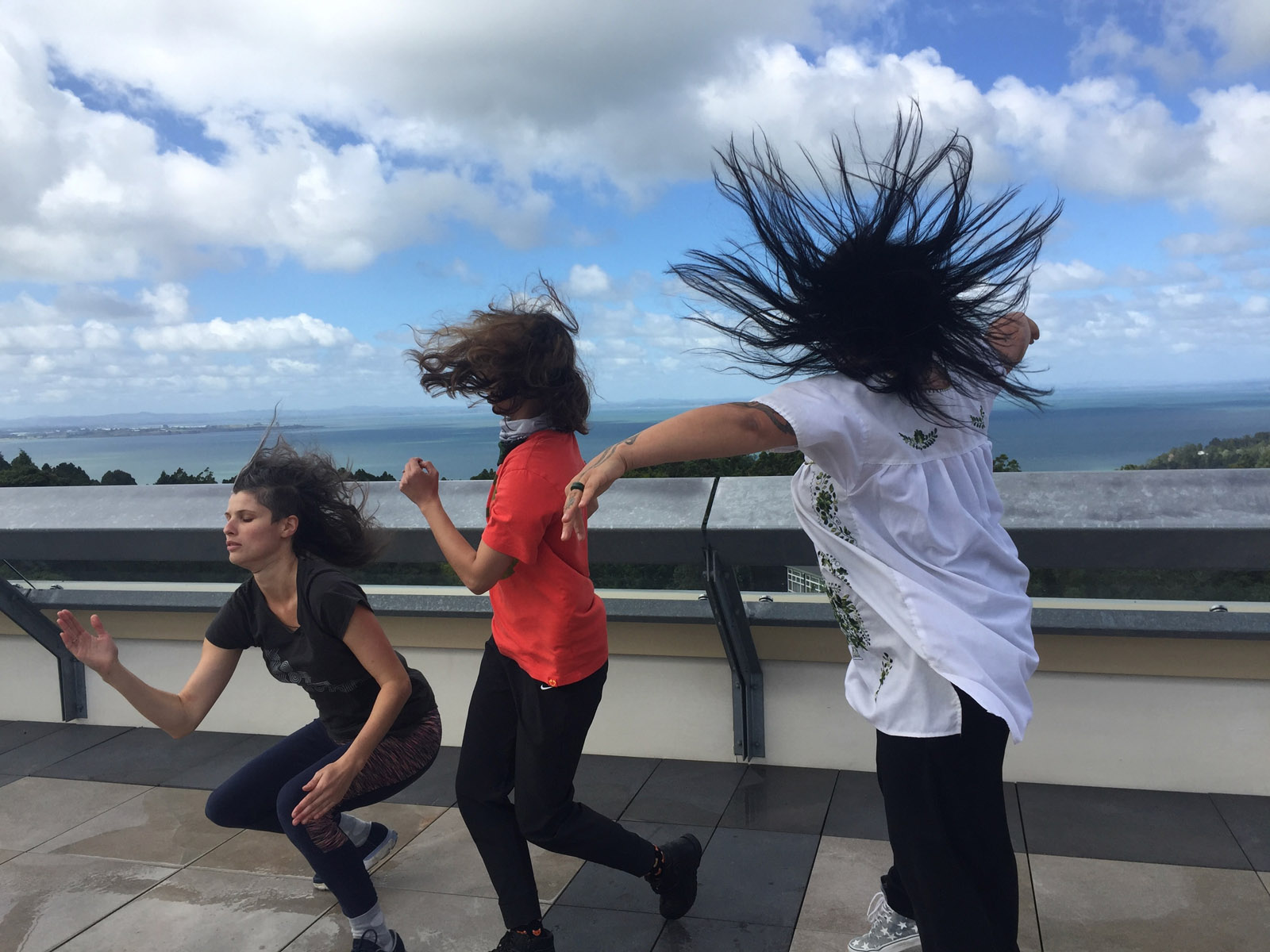
Figure 1: Jasmin Canuel, Maryam Bagheri Nesami, and Tia Reihana-Morunga in LungSong. Waitakeres. Photograph: Carol Brown.
The moving knowledges we re-imagine are carried through sustained relations; histories circulate through and with us. Our footsteps inscribe the ground, leaving traces of habitation and occupation. Enacting movement and voice at converging sites, physical and virtual, shaped by historical forces, we articulate from within two worlds, Māori and Pākehā.
And yet, we are travelling. Through virtual resources, the incorporeality of long-distance touch, mediated by fibre optic cables, screens, and data flows, we reach toward one another. We are on air and creatures of air, our bodies saturated with its substance, though we often remain unaware of the density of breath-atmospheres. An ocean of air presses on everything, and at its base, the atmosphere, is where our practice unfolds, as performance, as research, as lived philosophy.
What has been tactile now remains memory untelling. We (re)imagine our key resources and whakaaro to places between and within us.[4] Remembering the seven breaths of Papatūānuku and that the hau cannot be separated or dissected from the whole.[5] Our moving and breathing bodies return to witness the winds of conception and destruction, relating to the first breath of life. The interplay of the seven cycles that have guided us here and beyond.
We have learnt to move ‘like the wind’, ‘in the rain’ around, beneath and below each other with and without touching. Such kinesthetic milieu are our weatherlands, both corporeal and incorporeal. We conceive these milieux—voices and movements, histories and cosmologies, actions, and atmospheres—dancing in overlapping dimensions as cultural memory work. Between Naarm (Australia) and the Waitākeres (Aotearoa), un-settler-ing (Wanhalla et al. 2023) on contested and sovereign lands, we navigate a choreopoetics where historical contradictions are the seeds of a sustainable present and hoped-for future.[6]
As dance artists, narratives reveal themselves through moving and embodying histories that are participatory, investigative, and open to interpretation (Bowman 2006). Bodystories are always more than one. Moving, breathing as praxis provides a way to connect story as more than human, responsive, and respectful (Cortazzi 1993). In our practice, we invite sensing the shifting scales of breath, between corporeal and cosmological dimensions and humidities. Donald Blumenfeld-Jones (1995) discusses the relationship between the story and author, drawing parallels to an artist who “takes a situation and reconstructs it to convey something about it” (26). In the time of geostories, we pay attention to the agency of the terrestrial and the aerial in relation. Our choreopoetics refuse to settle.
If Earth is the author, what stories are being written upon us? As human, we might be considered the leaky pen with ink running all over the landscape pages of illegible sentences. Ink, like oil, causing devastation throughout the world. All this mess, we must make meaning from. All this mess, including the long historical subjugation and marginalisation of indigenous peoples. The mess that is Mother Earth writing her story of the potential destruction of humans, we as the messy ink dream of an agency. The significance of this work lies in holding space within the mess, acknowledging its devastations while seeking practices of renewal. Through embodied research and performance, we ask how movement, voice, and dialogue can transform illegibility into relation, creating weatherlands where knowledge is not extractive but emergent. By situating ourselves as both mark and medium, we confront the colonial inscriptions already written on land, air, and body, and begin to re-script possibilities for co-existence and survival.
Moving from agency to animacy, we address the weather as custodian and community practitioner, as sky bones and corporeal-cosmological infrastructure. Beyond the colonising gaze of Western science and philosophical concepts, we create weatherlands attuned to the cultural, spiritual, and ancestral stories that animate the skies of the southern hemisphere that breathe us. Through breath, voice, body and atmosphere, the cyclic rhythms of the taio (environment) locate us in movement, inviting thinking-with the breath of life, hau, hauora.[7] Activating (Raymond, 2016) the air between us as a medium of exchange and contemplation, we privilege proximity and presence over objectivity and identity. What we know depends upon our being (t)here, interacting, unsettling assumptions, and becoming in place. Relational forms re-appear, through affinities and alongside-ness responsive to Vā-kā (the ignited and actioned space in between) (Smith and Wolfgramm-Foliaki 2022). This interval signals a mode of practice where presence is activated, and knowledge arises through attentiveness to the shifting dynamics between people, movement, and environment. Doing so reclaims history as a protocol of ancestral story-work. Where geostories exist as a genealogical literacy in which to engage with the world.
Dancing on and with air, we seek a place-responsive praxis to unsettle and unstory figure-ground relations. Breathing at its most elemental level is an exchange of chemicals and particulate matter that happens invisibly. The body as apparatus is in constant exchange with atmospheric systems. Here, place is not fixed to a destination. Rather, it exists in response to the flux of livingness that encompasses urbanscapes of undone, unhoused, unromanticised memories on colonial-stained maps that no longer see waterways and mountains. Here, place is a living current, shifting with each breath, gesture, and glance, formed as much by tides of relation as by soil or stone. Through sensory mapping, mirrored movement, and shared improvisation, we tune to the layered ecologies and elements that shape where we stand.
Places have been felt to each other, in a room, on sand, in waterways, with the pressure of wind on skin, in the quiet between words, in the reclamation of genealogies through our moving call-and-response bodies. The breath of Papatūānuku is not a metaphor here; it remains a cosmological fact. It is the pulse inheriting both the shelter and the storms of those who came before. By inhabiting both ground and cloud, we reimagine place-based inquiry as an unfolding choreography of relation, responsive, unsettled, and continually remade in the crossing between physical and virtual weatherlands. From this grounding, we can unsettle the assumed binary of performer and watcher, loosening the linear transaction of a static performance-as-consumption. Instead, our dancing bodies become a shared field of relation, where bodies, land, and witnesses co-create meaning in the moment, each influencing the other in ways that rupture both place and the spiritual knowledge it holds.
We are the weather, and we are infinite.
We are human, and we are finite.
Outside formal spaces, the inseparability of our bodies from the flux of particulate matter in our surrounding biosphere is a lungsong. We advocate for an integral relationship to community, local environment, and biosphere; we advocate for breath in relation:
We are the weather.
Re-imagining land, spirit, and bodymind as inseparable, we, too, move together, between the finite and the infinite. As Aman Sium, Chandni Desai, and Eric Ritskes (2012) remind us, the spiritual does not withdraw from theory, nor from the gestures of daily life; it is already braided with thought, matter, and the unseen.
To re-imagine in this way is itself an act of survival: to breathe as weather, to feel knowledge drift through soil and lung, through tides of spirit and flesh. We are carried by these entanglements, borne toward the vastness of infinity, even as our bodies keep us grounded in the tender gravity of finitude.
We are the weather.
We mesh ourselves to each other through breath and movement, through the tangible and intangible, the unknown, the more-than-human and unseen. Climate, authored by Mother Earth, presses upon us to read the inked designs of critical health challenges, affecting bodies, minds, and spirits across the world (Bennett et al. 2014; Durkalec et al. 2015; Wheeler and Watts 2018). These inscriptions are carried in rising seas and thickening air, in droughts that crack the ground, and in the compromised lungs of those most vulnerable. In this reading, our own screaming sounds echo the methane of the culled beast released, amplifying the violence of extractive systems. Yet through movement, voice, and breath, we register these forces differently, transforming them into acts of witnessing, of solidarity, and of care. To embody such urgencies is to acknowledge the entanglement of climate, health, and colonial histories, and to practice forms of survival that are collective, relational, and more-than-human.
Dance performance research generates forms of knowledge that are not only analytical but also affective, sensorial, and relational (Brown 2015). To breathe, move, and voice these entanglements is to stage climate change not as an abstract crisis but as lived, corporeal urgency. For the wider ecological community of warriors and activists, such practices extend the struggle beyond policy and protest into the realm of felt experience, offering choreographies of resistance and care. They remind us that climate justice requires both intellectual critique and embodied solidarity, alliances across disciplines, movements, and communities that can mobilise change (Simpson 2017).
Gathering and navigating movement together, we ask ourselves, and the watcher, what it means to share breath, to inhabit space collectively? So, when you ask, can I feel the room breathing? I consider the multilayered ideologies of how we interpret room... whare... wharenui... wharetūpuna... whare tangata… and taiao.[8] I consider how we begin breathing in the whare (womb) of our mothers... Earth mother... and yes, the earth breathes… and she cries, yells, screams, recreates, resonates, and continues well before and long after we arrive. We were ourselves conceived in her womb, and the creation stories of Aotearoa New Zealand carry this knowledge forward, stories in which Papatūānuku (Earth mother) and Ranginui (Sky father) shape the very conditions of our being (Marsden 2003; Mikaere [2003] 2017; Royal 1998). From these ancestral narratives emerges an orientation to time and relation captured in the whakataukī (proverb) “ka mua, ka muri”: we walk backwards into the future, our eyes fixed on the past. This is not nostalgia but an ethic of relation: the past remains present, guiding us, so that ancestral breath, story, and knowledge act as a compass for moving forward. To walk backwards into the future is to acknowledge that our steps are shaped by those who came before, and that our future is held in the responsibilities we carry toward land, sky, and kin.
Wind in the teeth, old voices pushing through.
We walk backwards, ankles in mud, eyes on the bones of the hills…
Moving forward while facing the past, witnessing the winds of change on our skin, and reading the shifting skies for guidance. The moving body holds both memory and possibility. It becomes a living barometer, sensing the pressures of our time and tracing pathways toward futures shaped by care and relational criticality that is being danced in our bodies on landscape.
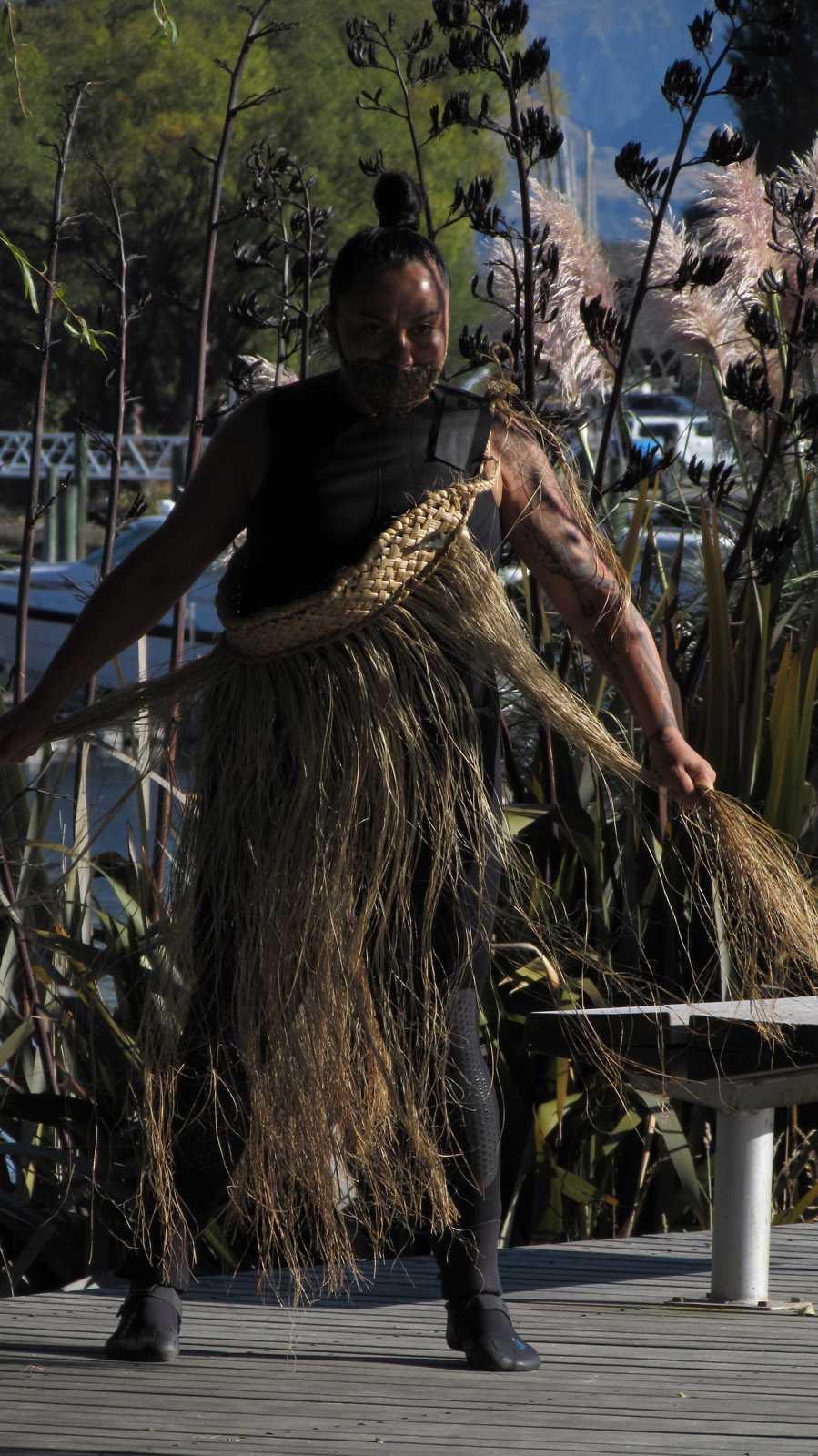
Figure 2: Living Archive of Breath, Lake Wanaka, Aotearoa. Photographer Raymond Tiddy.
index fingers drawn apart measure airflow between left and right
fingertip to tongue
moisten skin with saliva
draw your finger up into the air to taste its temperature and tempo
(choreography for LungSong and Living Archive of Breath)
The past breathes heavily before us; the future calls out behind us in wounded winds, fragile and urgent. This is not a longing for the past, but a call to responsibility, to hear ancestral echoes as warnings, to remember histories of land and sky, and to use that memory as guidance for how we respond to today’s climate crises.
Before us, the past breathes heavy.
Behind us, the future waits and wails in unusual wounded winds,
thin-skinned and hungry.
This is not nostalgia, but an ethic of relation: a choreography of listening to ancestral echoes, where each movement carries memory into the present. Dance is one way of capturing the inter-scalar from the atomic to the planetary:
Two women in long white dresses dragging whiteware
Angling on plinths
staring into the abyss
a deflated weather balloon
in the nightwind
above the Waitakere Ranges
(LungSong in EcoWest Festival 2019)
The powerful urge in some communities of settler-colonists in Australia and New Zealand to live without history, can create an immobilising silence. Dancing outside between maunga / mountain and awa / lake, Tia performs with a harakeke woven muzzle (Living Archive of Breath, Colour Festival 2019). Signalling to the audience on the lakeside, she evokes a history robbed of language with voices silenced by a colonial education that enforced a dominant language, English, over the indigenous language of Aotearoa, te reo Māori. In the background, Neža Jamnikar, a Slovenian dancer, turns in a long white dress on the pontoon floating above the deep glacial lake Wānaka, drawing vectors of relation with the snow-capped maunga of Tititea / Mt Aspiring.
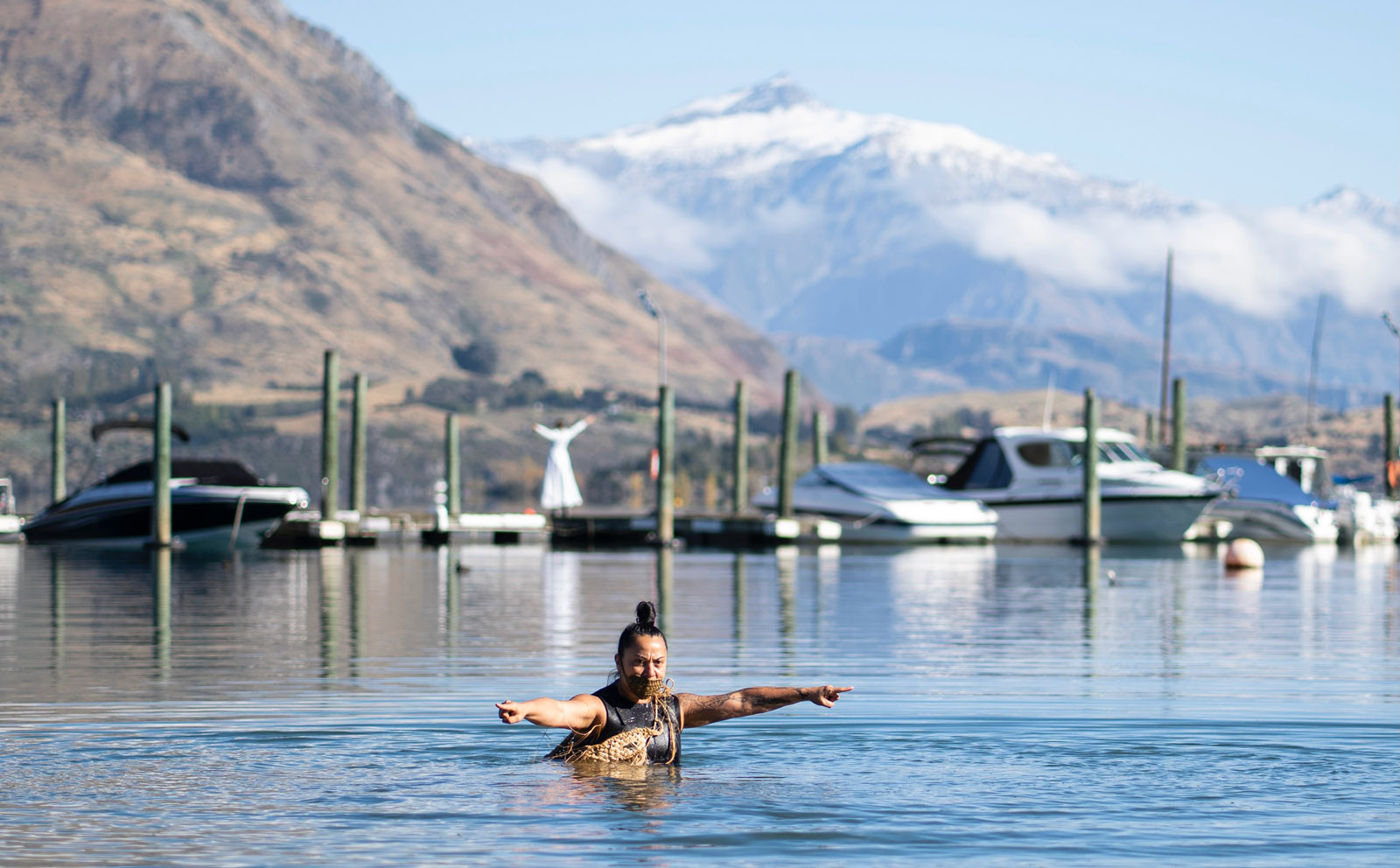
Figure 3: Tia Reihana-Morunga and Neža Jamnikar in Living Archive of Breath. Lake Wānaka. Photograph by Raymond Tiddy.
Freeing the breath in movement loosens voices and counters the crippling immobility of colonial silencing. But what happens when breaths are compromised by the masks of colonial forbearers?
Corporeal critique performed in the open air reveals dimensions of knowledge that exceed the institutionalisation of language as a form of control. Opening a vibrational resonance with flows of air between maunga (mountains) and awa (lake) and between performers signalling to each other at a distance communicates a desire for response-ability and accountability. Place-responsive choreography breathed between elements advances the potential for bringing awareness to relations between past and present, human and more-than-human, performer and witness.
Each step
a crack in the dry earth,
an attempt to mend
What we tore.
Hā (the breath) is the touchstone of practice, where internal and external identities meet. It signals how we are entangled, embodied through the exchanges of air that connect self and other, body and environment, human and more-than-human. Hā curates the felt consciousness of the moving body, enabling knowledge to be sensed, embodied, and disseminated. In te ao Māori, hā is not only the physical act of breathing but the expression of hau (vital essence), the medium through which life is activated and maintained (Marsden 2003). To attend to hā in practice is therefore to engage with the transmission of knowledge as a living force, situated in relation to whenua (land), whakapapa (genealogy), and wairua (spirit). In attending to hā, practice reveals the living relations that shape who we are and how we move together (Brown and Reihana-Morunga 2022).
Tia: Hā is NOT my silent partner… My skin breathes.. He tangata He tangata, He tangata (the people, the people, the people)… I smoke my feet on this whenua, this country… and you vote with the dirt of your ancestors. The smoke disperses my negativity only to return at the lunch break cafeteria of life, and so I breathe through my feet, because I am unable to walk.
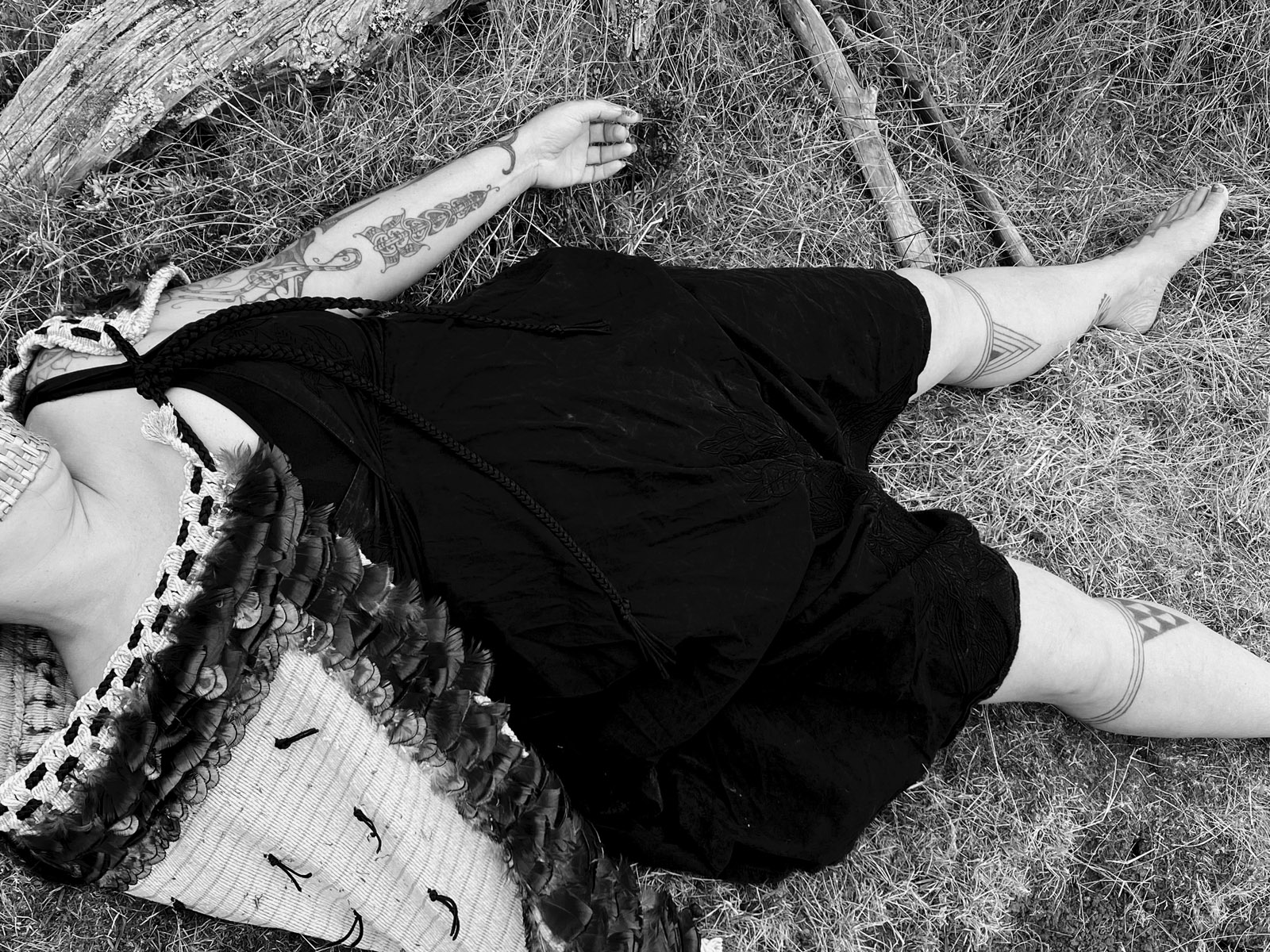
Figure 4: Tia Reihana-Morunga. Photo by Piripi Morunga.
Carol: The barometer is rising; we are in for some unsettled weather.
I take off my weather glasses to notice its patterns:
We are only ever a breath away from a change in the direction of the breeze
geostories replacing human stories
Both: We notice the fretwork of ground patterns
As weather makers, we are pattern makers
Creating systems of relations
Between things people, places, and objects
breath matters
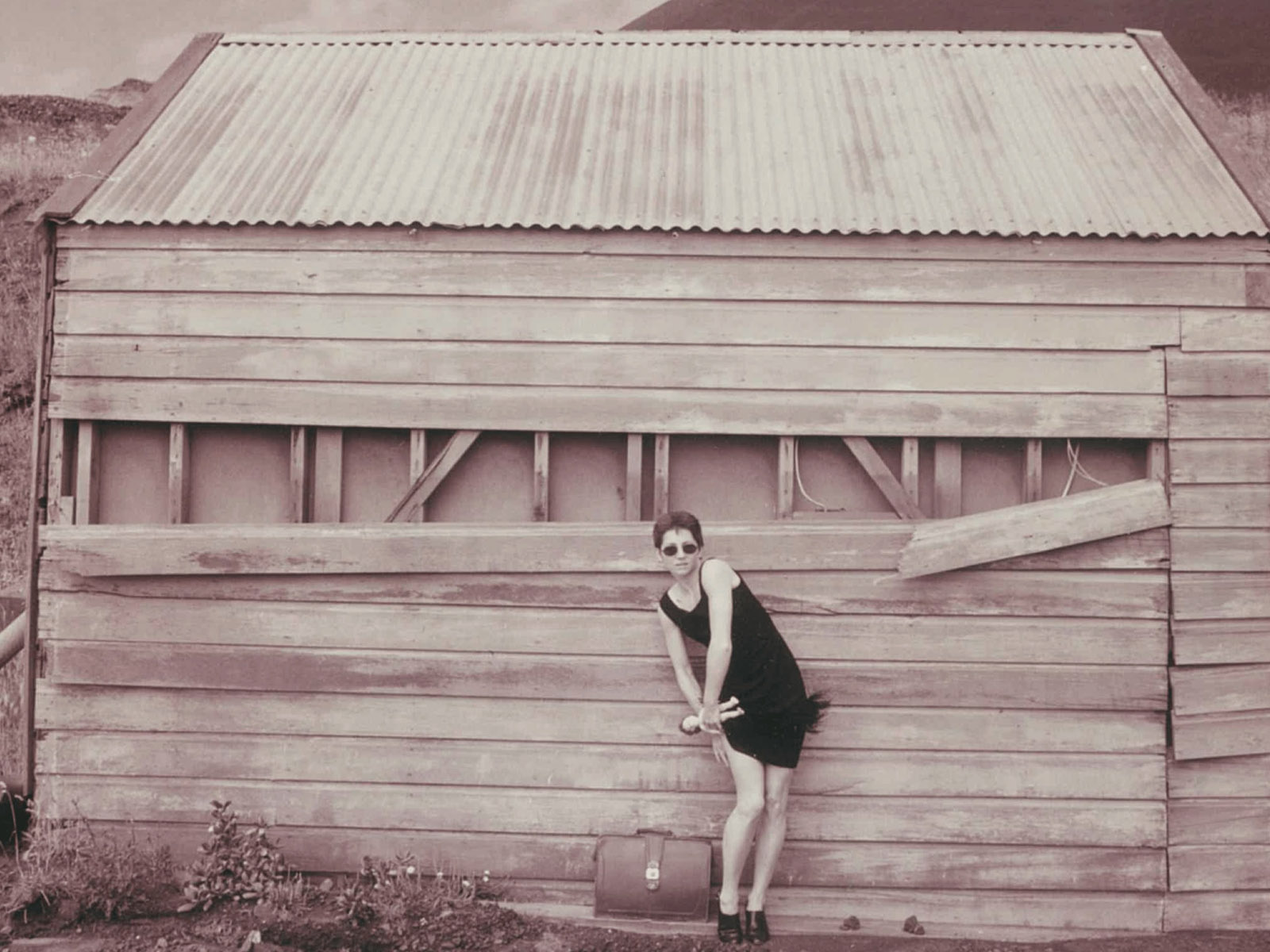
Figure 5: Carol Brown in Anatomy of Reason, Blackhead, Otago. Photograph by Ngaire Gardner.
Spoken together:
turning is tuning
inner ear
kinesphere
hemisphere
stratosphere
reorienting sky & bones
corporeality & cosmology
cycling-through
cosmological dances
breathing-with
the atmospherics of this artificially aerated space
a forum closed to the openair
yet air is our companion
invisible and quiet and everywhere
imagining future breath dances
laying down tracks for muscle memories
we re-turn
Tuning is turning
stirring breath and shifting atmosphere
turning into
mobile weather stations
for ground truths
we play with the vibration of gestural brush-strokes
orchestrating air
Gestures cut loose from the requirements of language
because Words Fail Us
in the wake of breath we reorient to a weather forecast for
the seven seasons of Wurundjeri:
Biderap, Dry Season (Jan-Feb)
Iuk, Eel Season (March)
Waring, Wombat Season (April-July)
Guling, Orchid Season (Aug)
Poorneet, Tadpole Season (Sept-Oct)
Buarth Gurru, Grass Flowering Season (Nov)
Garrawang, Kangaroo-Apple Season (Dec)
(Nguyen-Robertson [2010] 2025)
Our weatherlands, also Motherlands.
From an Indigenous dance perspective, “the human” is not an idea carved out in stone but a body in motion. We do not invent ourselves apart from land and sky; we emerge through steps, breaths, and rhythms. To be human here is not fixed, but rehearsed again and again, on the marae, in the studio, in ceremony, wherever bodies gather to move in relation.
Tia: How do we conceptualise the body as a means to make sense of the world?
Tohunga scholar Māori Marsden (2003) suggests that Papatūānuku (earth mother) is a living organism with biological systems, and these systems provide support to relationships and networks that include animals, birds, plants, and trees.
Until we re-learn the lesson that [hu/man] is an integral part of the natural order and that he/she has obligations not only to society but also to their environment—so long will they continue to abuse the earth. (Marsden 2003)
Carol: The concept of the body inherited from Western humanism would have us believe there are five senses, 206 bones, at least 600 muscles, and that we have a circulatory system, a digestive system, an excretory system, and a respiratory system.
[Translating and marking the body together:]
this is my trachea / pūkorokoro
these are my lungs / pukapuka
this is my thoracic cavity / rei
this is my dome like diaphragm / pātūpoho
my airways (bronchi) branch within
this is my nose / kūrei
this is my tongue / arero
this is my pharynx / pūhoromi
this is my larynx / paeoro
Carol: 23,000 breaths a day, we are always becoming something (Braidotti 2013).
Tia: Through the embodiment of the urban consider processes where experiences informed by history create sensorial-perceptual realms as alternative modes for life to be lived. Where the embodiment of my praxis as a māmā maker emerges in creations that map my whakapapa into the cityscapes I occupy and places where my tūpuna (ancestors) had yet to travel.[9] So I carry their courage to do so myself, leaving my dancing residue as a visitor and future wisp of dust. I trace ancestral narratives along concrete footpaths, incorporating the rhythms of traffic, their extractions taking up space in my lungs, fuelling the choreographic phrasing. As a breathing descendant, I carry hau into spaces that may not recognise it.
[Moving with turning and slicing arms rotating]
Carol: To know the weather is to read it in the temperature of our skin, in the movement of our breath and in the acoustics of our surroundings. We can read about the heat to come, but it is not until we step into intricate relationships with animals, plants, earth material, and other forms of life that we are in the contact zone (Haraway 2016) with a weatherland.
Tia: Kiri (skin) plays a role in the conceptualisation of whakapapa (genealogy): Our genealogical system symbolises the link between the present generation, the ancestors, and the land. Each person's kiri is a unique record of their whakapapa. So as I trace my skin to this moment, as it breathes through the vastness of my surroundings, I gather all the teachings I so desperately at times hope for. My skin breathes a certain smell of circumstance. Like a ta moko, to adorn this kiri.[10]
Tia: What does it mean to occupy space, and how do we leave it empty? My atmospheric footprints heavy in the Hā of my puku? Breathing in atmospheric fumes and exhaling karakia (prayer), my body is a barometer, a relational gauge attuned to the emotional, spiritual, political, and environmental currents of the moment. As a dancer and wayfarer of the moving body, I resist… I am the Weather.
Carol: How might corporeal and cosmological breathing offer an expanded paradigm for a choreographic system?
Alternating:
We feel the tension in the air
We cut the air
Melt in the air
Suck up the air
Explode in the air
Leap through the air
Press through the air
Tia:
I am the weather
I am patū [11]
I am puku
I am Papatūānuku
I am not translator… I am not compass (moral)… I am not a barometer of another's conscious …. bias.
I am the Weather!
Alternating:
I am the Weather
I am the Weather
I am the Weather
I am weathered
Writing beneath the nose of scholarship, our movements intersect and veer in different directions. Smudges appear in the margins like the brushstrokes of a dance we are just beginning to learn. Moving across this page, as a stage we are shifting times and dimensions in the humidities of our aerial bloodstream.
Tia: I let you smell my atmospheric wind as I show you my eye, my back, my foot, my finger. I let you smell my atmospheric wind from beneath my skin. I am the weather with limbs that will not succumb to the scum of the human. I de-center through the smells of my hā on the pā….[12] The intergenerational gastro-thermal scores that scream in silence, I am the weather.
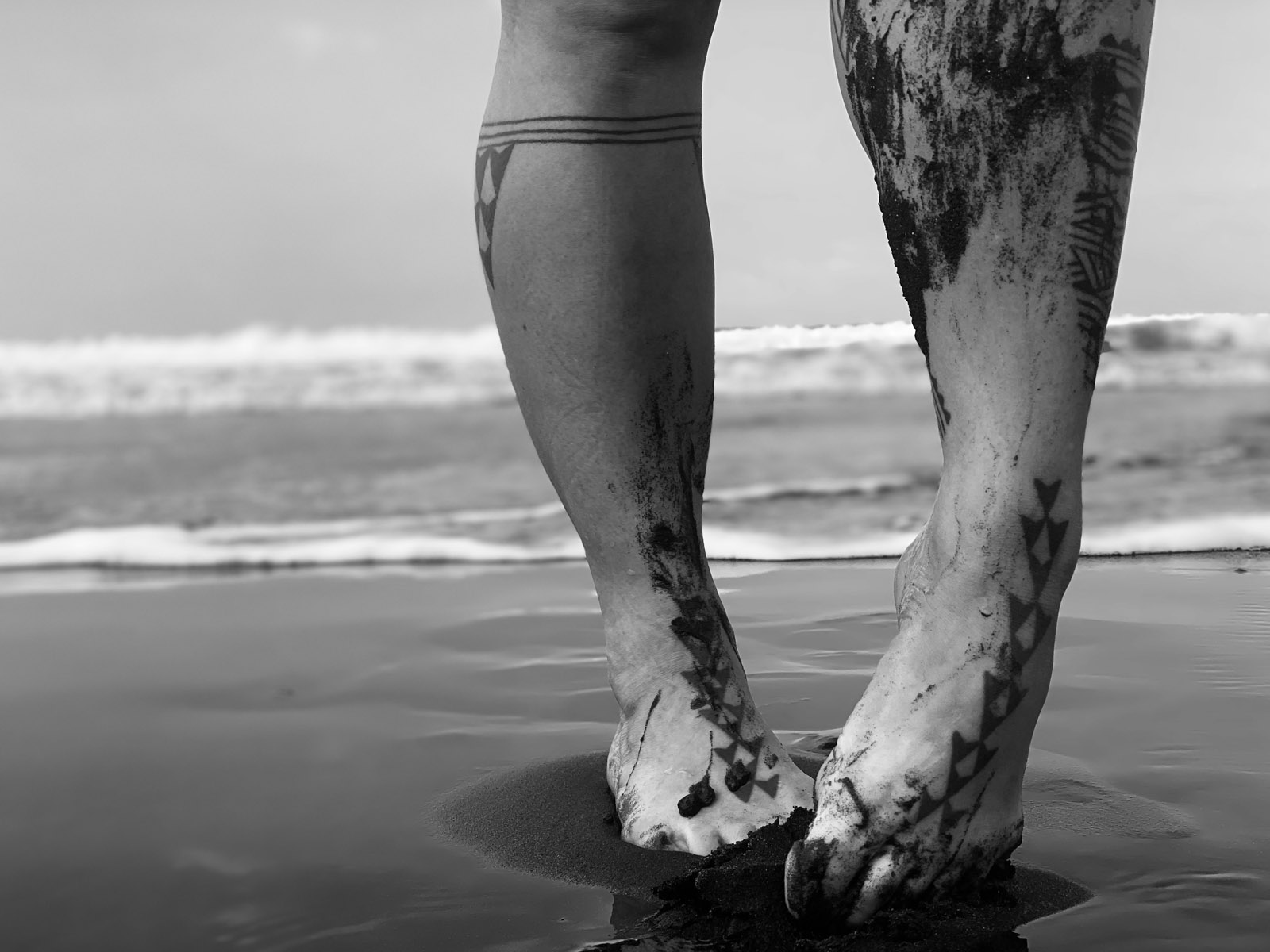
Figure 6: Tia Reihana-Morunga. Photo by Piripi Morunga.
[1] Toi rongoā refers to creative and artistic practices grounded in the principles of rongoā Māori (traditional Māori healing).
[2] Hauora is a concept of wellbeing that encompasses the balance of physical (taha tinana), mental/emotional (taha hinengaro), social (taha whānau), and spiritual (taha wairua) dimensions. Hau is layered in meaning including breath, wind, vital essence, and the spiritual force that animates life. It also refers to the binding spirit of reciprocity within relationships of exchange.
[3] Karekare a coastal settlement and beach on the west coast of Tāmaki Makaurau (Auckland), Aotearoa New Zealand. Known for its black sand, rugged cliffs, and powerful surf, Karekare carries deep cultural and historical significance. The name refers to “rippling” or “turbulent waters,” evoking the dynamic meeting of land and sea. Today, Karekare is recognised as part of the ancestral lands of Te Kawerau ā Maki.
[4] Whakaaro is a Māori term commonly translated as “thought” or “opinion,” but its meaning extends to the processes of reflection, intention, and perception.
[5] Papatūānuku is the Earth Mother in Māori cosmology, the primal parent who, with Ranginui (Sky Father), gave birth to all living beings. She embodies the land, soil, and sustenance of life, and is central to whakapapa (genealogical) connections between people and the natural world.
[6] Waitākere refers to the western ranges and surrounding lands of Tāmaki Makaurau (Auckland), Aotearoa New Zealand. Known in te reo Māori as Te Wao Nui o Tiriwa (The Great Forest of Tiriwa), the area holds deep significance for mana whenua, particularly Te Kawerau ā Maki and Ngāti Whātua.
[7] Taiao is a Māori term referring to the natural world and the interconnected environment, encompassing people, lands, waters, skies, and all living and non-living elements. Hau is a Māori term often translated as “breath,” “vital essence,” or “wind,” but it carries layered meanings across physical, spiritual, and relational dimensions. It refers to the life force that connects people, to place, and to the spiritual realm. Hauora is a Māori concept of holistic wellbeing that encompasses physical (taha tinana), mental/emotional (taha hinengaro), social (taha whānau), and spiritual (taha wairua) dimensions. It reflects an interconnected worldview in which individual and collective health are inseparable from relationships with whānau, community, and the natural world.
[8] Whare is a Māori term meaning “house” or “building,” but its significance extends beyond a physical structure to include its social, cultural, and spiritual dimensions. Wharenui (literally “large house”) is a Māori meeting house that serves as the principal building within a marae complex. Wharetūpuna (ancestral house) is a wharenui (meeting house) dedicated to and embodying a particular tīpuna (ancestor). Whare tangata ( “house of humanity” or “house of the people”) is also a term referring to the womb, the source of human life. In Māori cosmology the whare tangata is revered as a sacred space of creation, continuity, and whakapapa (genealogy). Taiao - please see note 7.
[9] Whakapapa is a foundational Māori concept referring to genealogy, lineage, and the layers of connection between people, ancestors, the natural world, and the cosmos.
[10] Tā moko is the traditional Māori practice of marking the skin with designs that record genealogy (whakapapa), identity, status, and life history. Unlike tattooing in a general sense, tā moko is embedded in tikanga (customary protocols) and carries deep cultural and spiritual significance.
[11] Patū is a short-handled striking weapon used to strike in combat and for energetic engagement.
[12] Pā is a fortified village or settlement.
Bennett, Hayley, Rhys Jones, Gay Keating, Alistair Woodward, Simon Hales, and Scott Metcalfe. 2014. “Health and Equity Impacts of Climate Change in Aotearoa-New Zealand, and Health Gains from Climate Action.” The New Zealand Medical Journal 127 (1406): 16–31.
Blumenfeld‐Jones, Donald. 1995. “Fidelity as a Criterion for Practicing and Evaluating Narrative Inquiry.” International Journal of Qualitative Studies in Education 8 (1): 25–35. https://doi.org/10.1080/0951839950080104.
Bowman, Wayne D. 2006. “Why Narrative? Why Now?” Research Studies in Music Education 27 (1): 5–20. https://doi.org/10.1177/1321103X060270010101.
Braidotti, Rosi. 2013. The Posthuman. Polity.
Cortazzi, Martin. 1993. Narrative Analysis. Routledge. https://doi.org/10.4324/9781315067421.
Brown, Carol. 2015. “So, Remember the Liquid Ground.” In Attending to Movement: Somatic Perspectives on Living in This World, edited by Sarah Whatley, Natalie Garrett Brown, and Kirsty Alexander. Triarchy Press.
Brown, Carol, and Tia Reihana-Morunga. 2020. “Hau: Living Archive of Breath.” Performance Research 25 (2): 69–78. https://doi.org/10.1080/13528165.2020.1752579.
Durkalec, Agata, Chris Furgal, Mark W. Skinner, and Tom Sheldon. 2015. “Climate Change Influences on Environment as a Determinant of Indigenous Health: Relationships to Place, Sea Ice, and Health in an Inuit Community.” Social Science & Medicine 136–137 (July): 17–26.
https://doi.org/10.1016/j.socscimed.2015.04.026.
Haraway, Donna J. 2016. Staying with the Trouble: Making Kin in the Chthulucene. Duke University Press. https://doi.org/10.1215/9780822373780.
Harris, Alexandra. 2015. Weatherland: Writers and Artists Under English Skies. Thames and Hudson.
Marsden, Māori. 2003. The Woven Universe: Selected Writings of Rev. Māori Marsden, edited by Te Ahukaramū Charles Royal. Estate of Rev. Māori Marsden.
Mikaere, Ani. (2003) 2017. The Balance Destroyed: The Consequences for Māori Women of the Colonisation of Tikanga Māori. Te Tākupu, Te Wānanga o Raukawa Ōtaki.
McKibbin, Philip. 2019. Love Notes: Towards a Politics of Love. Lantern Books.
Mullan, Brett, Andrew Tait, and Craig Thompson. 2009. “Climate – New Zealand’s climate.” Te Ara – the Encyclopedia of New Zealand. https://teara.govt.nz/en/diagram/7746/winds-over-the-southern-hemisphere.
Nguyen-Robertson, Catriona. (2010) 2025. “The Seasons in the Sky: The Seven Seasons of Wurundjeri.” The Royal Society of Victoria, 15 May. https://www.rsv.org.au/articles/seasons-in-the-sky.
Paraha, Tru. 2020. “A choreopoetics of Te Pō.” Ka Mate Ka Ora: A New Zealand Journal of Poetry and Poetics 18: 29-41.
Royal, Te Ahukaramū Charles. 1998. “Te Whare Tapere: Towards a Model for Māori Performance Art.” PhD thesis, Te Herenga Waka—Victoria University of Wellington. https://ir.wgtn.ac.nz/handle/123456789/27920.
Smith, Hinekura, and Ema Wolfgramm-Foliaki. 2022. “Va-ka: Igniting the space between Mana Whenua and Mana Moana research Relations.” New Zealand Sociology 37 (1): 20-41.
Sium, Aman, Chandni Desai, and Eric Ritskes. 2012. “Towards the ‘Tangible Unknown’: Decolonization and the Indigenous Future.” Decolonization: Indigeneity, Education & Society 1 (1): I–XIII.
Todd, Zoe. 2016. “An Indigenous Feminist’s Take on The Ontological Turn: ‘Ontology’ Is Just Another Word for Colonialism.” Journal of Historical Sociology 29 (1): 4–22. https://doi.org/10.1111/johs.12124.
Wanhalla, Angela, Lyndall Ryan, and Camille Nurka, eds. 2023. Aftermaths: Colonialism, Violence and Memory in Australia, New Zealand and the Pacific. Otago University Press.
Wheeler, Nicola, and Nick Watts. 2018. “Climate Change: From Science to Practice.” Current Environmental Health Reports 5 (1): 170–78. https://doi.org/10.1007/s40572-018-0187-y.
Carol Brown is a choreographer and dance scholar from Aotearoa New Zealand. Recent choreographies include Saltines for Sealion Women (Wild Dunedin Festival 2025), Opera for the Dead (AsiaTopa 2025), Tensegrity (Melbourne, 2022), LungSong (EcoWest, 2019), and The Living Archive of Breath (Colour Festival 2019). Carol's research interests lie in choreographic collaboration and site responsive performance. She is Professor of Choreography at the University of Melbourne.
Tia Reihana-Morunga is a senior lecturer in Dance Studies in Creative Arts and Industries and a Co-director of the newly established Centre for Co-Created Ageing Research (CREATE-AGE) at The Waipapa Taumata Rau, University of Auckland. Her research in the arts and education sectors focuses on culturally responsive praxis reflective of indigenous knowledge systems. As an Indigenous artist, Kaupapa Māori research practitioner, and community facilitator Tia works extensively in Arts, Education, and Health with Mana Oceania communities in Aotearoa and the wider Pacific.
© 2025 Carol Brown and Tia Reihana-Morunga
Except where otherwise noted, this work is licensed under a Creative Commons Attribution-NonCommercial-ShareAlike 4.0 International License.