Aion Arribas and antje nestel, shy*play
Although we can never truly pinpoint when or where a story begins, we, Aion Arribas and antje nestel, choose to embark on this narrative with an invitation to a month-long residency in Yokosuka, Japan, granted to us following a successful application. As with most stories, narratives are not linear; they weave within their fabric a tapestry of interlocking tales—stories nested within stories—despite the Western modernist rubric wanting us to believe otherwise. This story celebrates itself in its muddledness, as it refuses to take the path of colonial practices of storytelling, which often give a pretense of uniformity and universal progression. This story might hopefully read as fragmented and turbid, and most of the time in search of connections yet to be made.
Hence, this story is as much a project of the past as it is of a future yet to be written and told beyond the confines of this specific narrative. Futures are crafted and continually shape the present lives of those who are willing to welcome different possibilities within the movements of the now. Black feminist writer Sylvia Wynter (2003) takes the forefront for us in this endeavor, particularly her call for the creation of new narratives about who we are or can be as humans, narratives that would overthrow the dominant yet not all-encompassing story of the “human as Man”, with its roots in colonialism. As many minoritarian thinkers have frequently reminded us, stories perform; they exert a powerful influence on us, shaping our thoughts, perceptions, feelings, behaviors, and bodies. Thus, as Martin Savransky (2021) notes, “no story can claim innocence” (13). This essay is up for the task, yet always in hesitancy, as it should be with every attempt at storying, because no story can ever detach itself from what it leaves out. Our story wishes to story the relationships between three interwoven and ever-evolving entities, which, as far as we know, have never been thought together before. These entities are the noren—traditional fabric dividers hung in doorways or windows—the Site of Reversible Destiny—a park in Japan designed by the architectural duo Arakawa and Gins—and a workshop on Doing Neurodiversity by shy*play in Yokosuka, Japan. At the heart of this convergence lies a conception of neurodiversity, serving as the magnetic core that draws these three dimensions into a dialogue.
There is ongoing discussion about the concept of neurodiversity, which has its origins in autism self-advocacy and identity-based social movements (Silberman 2015; Walker 2021; Chapman 2023). Emerging largely from English-speaking autistic communities in the 1990s, particularly through online networks and self-advocacy efforts, the neurodiversity movement has challenged deficit-based perspectives on autism and related tendencies. Advocates argue that autism should be understood not as a disorder to be treated or cured, but as a natural form of human variation. This perspective does not necessarily exclude viewing autism as a disability; rather, it is often associated with the social model of disability, which emphasizes the role of environmental and social barriers in producing disability (Oliver 1990).
Initially, neurodiversity was embraced as a socio-political identity, aligning with broader minority group movements. This perspective allowed autistic people—perhaps for the first time—to take pride in their identity and to claim political rights that foster greater social participation. Over time, the movement expanded to include other “neurominorities” (Walker 2021), such as individuals with dyslexia, ADHD, brain injuries, and more. While this activism remains vital, the concept of neurodiversity has evolved in various contexts, particularly in response to critiques of identity politics—critiques that point to a lack of relational and intersectional nuance, as well as a tendency toward essentialism.
Our thinking-doing with neurodiversity, as we will demonstrate in this essay, diverges from the previously mentioned approach, yet it is indebted to it and remains connected. Our collective, shy*play, functions as both a pedagogical and artistic practice, engaging with neurodiversity not as a mere explanation, but as a dance of relational difference. Within carefully crafted workshops and participatory installations and performances, we endeavor to do neurodiversity in ways that unleash previously untapped creative potentials for diverse socialities, knowledges, and entire worlds. This journey moves us beyond the individual subject and identity politics, allowing us to experiment and delve into assemblages of human and more-than-human elements. It invites us to ask what neurodiversity can do, especially when considering perception, language, and movement as always relational and ecological.
That is not to say that engaging with neurodiversity means abandoning criticality; critique is indispensable to our approach. This involves the ongoing examination of pathologizing practices associated with the medical model—investigating their origins, understanding why they have become so dominant, and analyzing how they operate within particular contexts. It also requires exploring their deep entanglements with other forms of oppression, such as ableism, whiteness, hetero-cis-normativity, speciesism, and classism. In other words, our aim is to deconstruct these structures and to recognize the fundamentally relational nature of all experience.
In this tapestry of exploration with neurodiversity, we find ourselves far from alone. Numerous artists and thinkers from around the world have embarked on this world-building mission toward new futurities (Savarese 2012; Manning 2013, 2016; Yergeau 2018; Wolfond 2023; Hilton 2025). Some of them will also assist us in the production of this story as an essay, and they will be mentioned throughout. This rich diversity of approaches to and with neurodiversity beckons us toward a realm that is both one and many, underway and still in the making. This “pluralistic universe,” drawn from the insights of philosopher William James ([1908] 1996), lies speculatively entwined in the “and” that binds the “many” and the “one” of neurodiversity, with the “many” understood as vibrant worlds in constant connection, always in generative frictions. Contemporary thinkers working in this Jamesian lineage, such as Erin Manning (2013, 2016) and Brian Massumi (2013), have taken up and extended this pluralist ontology in different directions. This attention to multiplicity and relation resonates with Martin Savransky’s reading of James’ pluralistic universe: “[T]he pluriverse trembles in the interstices between the one and the many, insinuating the possibility of other worlds in this world, of differences all the way down” (Savransky 2022, 4). This common mission of ours is pluralistic at its core, simultaneously one and many, moving toward doing and storying with neurodiversity differently and yet connected. We do not know what neurodiversity can do.
At the invitation of 0-ea, a curatorial initiative based in Yokosuka, Japan, we undertook a one-month research residency culminating in a workshop with local participants in Yokosuka. While the direction of the research was intentionally left open and allowed to develop in response to the residency’s encounters and conditions, it was understood from the outset that it would culminate in a public workshop. The invitation arose from our ongoing artistic research into sociality-making practices informed by neurodiverse tendencies and our efforts to work creatively with these toward the construction of participatory performances and installations that explore forms of collectivity beyond neurotypical demands.
Our arrival in Japan coincided with an impulse to understand and translate our experiences, especially our social ones, through Western preconceived concepts of neurodiversity. We found ourselves in a new culture, unfamiliar with our habitual ways of reading sociality. Joy emerged in how our quiet tendencies, preference for less eye contact, and other behaviors appeared to align with prevailing social norms. We caught ourselves thinking, “A better home for people like us,” and celebrated with deep sighs of relief. Yet that relief also raised questions about the concepts through which we were reading the situation.
With insights from locals like Koichiro Osaka, founder of 0-eA, and autistic writer Naoki Higashida, our initial elation was tempered with tremendous care. Neurodiversity and normality are narrated differently in Japan; what we perceived as shy and neurodiverse behaviors might, from a local cultural perspective, be perceived as forms of attentiveness and respect, particularly toward seniority and social hierarchy. They also insightfully alerted us that the practice of storying disorders is not absent there but take culturally specific forms. Much like in the West, yet with nuances unique to their context, neurotypical norms pervade areas like science, education, the professional world, the art world and family life, often devaluing diverse ways of knowing, behaving, communicating and sociality-making.
These insights returned shy*play’s quiet mantra—Do Neurodiversity—to the foreground, displacing our initial impulse to translate experience through pre-existing neurodiversity frameworks. In the wake of the re-emergence of this mantra, which has accompanied us since shy*play’s inception, we were prompted to orient the residency toward exploring modes of dialogue as encounters between worlds that do not take translation and understanding as their ground. In doing so, we sought to avoid the traps of neurotypicality. This orientation led to the development of the workshop as a practice of dialogue across difference.
One must be very cautious when using the word “dialogue,” as it is often framed exclusively within neurotypical conventions. Under this framework, dialogue is perceived, among other things, as an exchange in which participants use spoken human language to communicate. It typically occurs between bounded individuals, with attention exclusively directed to the human counterpart. It is expected to unfold in a logical, sequential manner and to be conducted in a representational language, with participants endeavoring to understand one another. Dialogue often behaves confidently as if it can encompass everything and be easily passed on, playing on its supposedly universal character: “Tell me so I can understand you!” Yet, as autistic writer Mel Baggs (2010a) shows, language cannot translate between modalities of experience: “The way my thoughts work creates some…problems for language. And it’s not just that I haven’t found the absolute best combination of words to translate my thoughts with. It’s that on a fundamental level the thoughts don’t translate.”
Our idea of dialogue for the workshop did not oppose language, but recognized its limitations, especially when language is wielded as mere representation. We sought to construct and facilitate a dialogue that emerges from neurodivergent ways of doing and knowing how to communicate. We reimagined dialogue through the lens of neurodiverse sociality, adopting, as Remi Yergeau (2018) proposes, a rhetoric that “tics, stims, commits faux pas, and averts eye contact” (31). To this, we added a rhetoric that murmurs, stutters, claps hands, flaps, and mumbles—a rhetoric that communicates beyond speech, even if we don’t always know what we mean with certain movements. We desired a dialogue that honors and attends to the affective power of quietness, emphasizing its sonic register as a level of intensity that demands deep engagement, as black feminist writer Tina Campt (2017, 6) would say.
Furthermore, the dialogue we aimed to facilitate learned from the poetic language and practices of many neurodivergent poets, especially Tito Mukhopadhyay (2015, 2021), Adam Wolfond (2022, 2023), and Hannah Emerson (2022), who teach us that language can be a sensing practice too—not cut off from the world, but in co-composition with it and its experiential immensity of perception and sensation. And perhaps more importantly, this dialogue aimed to foreground the ineffable felt that can never be fully captured in language but that performs affectively—the stuff that moves vibrantly beneath and between language, yet still in relation to it. These include movement, texture, opacities, shape, sound, vibration, and color, all in continuous relation.
Our exploration of dialogue-making also foregrounded our own practices as performance and installation artists, who often find greater meaning and joy in communicating with the world through movement, space, and material qualities, rather than through spoken language. In other words, we sought to facilitate a dialogue that affects and is affected, that moves, performs, speaks, and senses, and does not exist merely to understand and translate between contexts, or even more dangerously, when one attempts to swallow the other world into its own image. Instead, it attempted to explore a dialogue in which worlds relate like horses in a blowing game of trust and exploration, discovering what such an encounter between contexts can do when doing neurodiversity is one of the elements that brings us together. “Do neurodiversity.” “Do neurodiversity.” “Do neurodiversity.”
This story, as an essay, will attempt to tell one of the many interconnected stories of how we endeavored to facilitate such a dialogue through a workshop.
Walking through the streets of Japan, one can hardly overlook the omnipresent noren at the entrance of countless restaurants, cafes, and shops. These noren often veil the establishments, draping over windows and doors to a low level, making it very difficult to peek inside. A different negotiation between the senses was required from us when choosing where to dine or sip tea. As neurodivergent bodyminds sensitive to stimuli in certain milieus, selecting a place to sit is not straightforward. We find ourselves peeking inside restaurants to assess the crowd, the busyness, potential seating spots, and the amount of visual noise in the space, among other factors. In our experience, a look inside from the outside often determines, when unfamiliar with the place, whether it will be a hit or miss.
This habit of self-care transcends mere monosensory activity; it must be understood as a multimodal act whereby different senses cooperate to actualize perception. I hear the murmur of voices and the unbearable hum of the coffee machine with my eyes. Proprioceptively, I see the path to the table in the far corner by the window, where the chair beckons with its promise of comfort, whispering its “sittability”. The textures of the chair, felt from outside the cafe’s window, send tingles through my body to the touch of cotton napkins on the table. Our senses, never solitary, weave together to craft a unique moment of experience (Massumi 2017). To gaze from the outside is never to see the ‘real objective world’; rather, it is a relational act of creation, where body and world arise anew as this body and this world. And while these moments of experience are intensely complex, as every experience is, perception in these instances functions mostly instrumentally, as it requires our modalities to categorize experience into this and that object, this and that potential warning, or this and that potential action. Thankfully, they do; otherwise, this practice of peeking in would lose its utility. In Japan, however, looking in was not always possible during our stay. This constraint turned into a gift, revealing unexpected potentialities in our journeys of perception.
In the context of Japan, the noren comes with a prevailing narrative that situates the phenomenon historically and culturally. Predominantly, the noren story tells of its initial embodiments as a necessity, serving as a protective layer in front of doorways against wind, sun, and dust, as well as a subtle separation between spaces to allow for some privacy without the solidity of walls. With the rise of merchant culture, the object evolved into something more than merely functional. Many businesses began using it as a form of signage, adorning it with shop names, family crests, and symbols representing the products or experiences they offered. Temples also embraced the noren, often featuring religious motifs and symbols. Culturally, the noren also embodies the concept of ma—the space between—which signifies the balance between movement and stillness, sounds and silence, presence and absence. By allowing light and air to pass through, the noren maintains a sense of continuity and connection between spaces, while also marking transitions between different areas or rooms (Masuda 1989)
The narrative of the noren is far too expansive to be fully captured in a single story. Let us share another perspective on this multifaceted and ever-evolving presence—not to overshadow its existing tales, but to convey our experience of it, considering that an object is always an event with potentially infinite stories to tell. Our encounters with the noren are imbued with neurodiversity, intertwined with its historical context, even as we remained unaware of its cultural and historical roots, being newcomers to this phenomenon. In its dance with our bodies, the noren often fostered an embodied vision that resisted instrumentalization, even if only fleetingly. Yet, this temporary suspension of instrumentalization, each time unique, became a point of intrigue and one of many springboards for crafting the dialogue we wished to facilitate.
It always starts as a pull—we were hungry—for recognition to appear. Each pull births a unique recognition. But this time, the pull was potent, echoed by the growls of our stomachs. The street suddenly transformed into a stage for all the various norens—too many of them, we mused. When your stomach echoes like ours, the recognition of norens seldom arrives without the promise of what lies behind them: a meal. The desire for food had to first unveil the norens to us before eating could take place. Our mouths watered impatiently, defying the wait to cross the threshold. Bereft of our usual self-care rituals, we plunged into the unknown, drawn by another pull—the allure of that elegant white fabric, dancing with what seemed like the sketch of a cat’s paw in motion. The noren invited a gentle bow, which was met with a caress on our hair and face. Our heads felt submerged, and as we crossed the threshold, they didn’t remain bowed, yet they were still under water. How did we know we were still submerged? Instrumentalization was nowhere to be found. We observed textures, colors, patterns, and lines as one might see when looking through dense water, where no object for action can (yet) be distinguished. The potential action in seeing and sitting did not appear instantly, nor did the corners or our usual requirements for care. Objects and actions were delayed by some instants, but in these short moments, everything changed. It was a felt forming of the world and our bodies, an ineffable witnessing accompanied with a lot of joy.
Autistic writer Donna Williams (1998) describes this mode of encountering or witnessing in perception before perceiving the object as it is as the “art of the object”. She writes:
Most people perceive objects beyond their grainy, sheeny, reflective, flowing, coloured or opaque appearances, beyond their smooth, raspy, cold, textured tactile experience, beyond the sounds of their chinking, thud-thud, tap-tap surfaces when impacted upon, their sweet, or savoury or chemical tastes or smells, their flexibility, solidness or bounce when bitten into or impacted upon. Most people experience the object before the art of it. They whisk over the sensory into the literal and experience themselves not just in the company of glass, wood, metal, paper, plastic derived objects but beyond this to the significant; that these objects are for cooking, decoration, belong to their neighbour, require a good clean etc. (Williams 1998, 93)
The art of the object, or what we call the “artfulness of the event”, must not be understood as artful qualities belonging to the object itself; that would assume that the event is already categorized into objects and subjects—a subject experiencing the object’s qualities. The event is precategorical, in the time of its forming when boundaries are yet to be established, when “one is the ‘whole world’ and everything experienced of that world is an indistinguishable and resonant part of one’s self with no need to explore it as a separate entity” (Williams 1998, 12).
Philosopher Erin Manning (2013, 2016) maintains that there is a mode of perception particularly attuned to the “more-than” of experience, which she calls “autistic perception.” She writes, “Rather than seeing the parts abstracted from the whole, autistic perception is alive with tendings that create ecologies before they coalesce into form. There is here as yet no hierarchical differentiation, for instance, between color, sound, light, between human and nonhuman, between what connects to the body and what connects to the world” (Manning 2016, 14). Autistic perception is direct perception in the event’s unfolding; a direct perception in the workings of perception. However, despite calling it autistic perception—and we want to emphasize this point—Manning’s intention is not to describe autistics exclusively. Rather, she alludes to a tendency in perception shared by all—both autistics and non-autistics. Nevertheless, as Manning argues, many autistics, and we want to add many neurodivergent bodyminds, are especially aware of it, as they often experience the world more “directly.” Everyone is a direct perceiver, yet neurotypicals are often less attentive to it due to their tendency to “chunk” experience very quickly, making seeing in perception unseen. Chunking divides perception into bounded subjects and objects, actions, categories, either/or logics, and judgments. However, we must understand that without the forming field, chunking would not be possible. Thus, we all perceive directly just as we all chunk; time is the differentiating factor.
So what prompted our perception to become so strongly attuned to autistic perception, or to perceive perception’s birthing in our encounters with these restaurants? The answer was already given yet implicitly: the event. We must be careful not to correlate the event solely with sensory input. The “conditions of emergence” (Massumi 2017, 85) like photons or sound waves cooperate closely with the web of the senses. It is in the event, in the encounter between sensory input and the convergence of the senses, that a distinct experience is composed. In Japan, our seeing was woven through a co-constitutive event-fabric with different conditions for seeing—namely, cooperation between the potentiality of our senses and the technological potential of architectural space and time. These conditions encompassed not only the obstruction of the noren, its attractive pull, and its gentle brush on our bodies but also our unfamiliarity with many Japanese interiors and their invitations for action, like the beckoning “sittability” of the tatami. As we grew more familiar, encountering the noren time and again, habit began to guide our bodies toward a more instrumental view, though always entwined with delightful disruptions. Throughout our visit, our vision was never solely instrumental; direct perception consistently shaped our experiences. These two modes of seeing are not mere binaries but constitutional; instrumental perception can never exist without its emergent field. Direct perception, or, as we like to call it, seeing in perception, is staring through the window of life’s forming—a time before language, categories, and action, when one is the whole world.
Entering a new space, as we did in Japan, is never a neutral beginning. What is the directionality of the space? How is the space conditioned to be seen and felt? What actions accompany this space? An entrance is always more than its affordance. Neurotypicality has conditioned the passaging event to be operational and successful only when it goes unnoticed. Consequently, most neurotypicals don’t even perceive it as an event. Restaurant norms dictate: “Enter, sit, and pay attention to the menu.” It is assumed that objects like doors, chairs, floors, and menus are predetermined and devoid of processuality, encountered by all in the same way; otherwise, something must be wrong with the person. But what if the process of interior forming does not go unnoticed, as with autistic perception? Anne Corwin illustrates this difference in passaging, noting, “I often tend to sit on floors and other surfaces even if furniture is available, because it’s a lot easier to identify ‘flat surface a person can sit on’ than it is to sort the environment into chunks like ‘couch,’ ‘chair,’ ‘floor,’ and ‘coffee table’” (Corwin as quoted by Manning 2013, 219). A tendency to chunk “late” is challenging in a world that demands fast chunking to perform within its neurotypical structures. But as many neurodivergent writers have shown us, a tendency to chunk late comes with immense potentiality for difference and a lot of joy as well. Remember, Donna Williams even calls it an art.
As we understand it, Neurotypicality is not just a classification of people but a sociopolitical structure that makes us bodies, or as Manning would say, “bodies” us. Through entrenched scientific and humanist concepts, as well as material conditions and expected modes of engagement, neurotypicality shape most bodyminds to recognize what is a valuable and sane movement, sound, utterance, thought, and perception. Many habitually perform neurotypically without conscious effort. One method neurotypicality uses to maintain control is by teaching us from a very young age that a normal and healthy body adheres to concepts such as intelligence, competence, intentional, speaking, proper gait/movement, cognition, and executive function. In other words, neurotypicality establishes the relational conditions that allow people to emerge as supposedly good bodies, that is, correctly functioning, talking-walking subjects.
These conditions cannot be understood exclusively through neurotypicality; they must be considered in their connectedness with other oppressive systems, for example, hetero-cis-normativity (Walker 2021; Chapman 2023). Through the concept of “neuroqueer”, Remi Yergeau (2018) demonstrates how neurotypicality and its bodily demands are intertwined with normative ideas and performances of gender. Yergeau illustrates this with the example of hand movements, noting that some neurodivergent bodyminds engage in stimming—often described as repetitive bodily movements. Neurotypical perspectives frequently characterize these movements as anti-social, non-relational, non-discursive, and non-intentional. It insists these movements must be controlled in accordance with a normative performance of binary gender roles: act like a normal girl or like a normal boy. However, some neurodivergents find it impossible to meet the oppressive neurotypical demands, which can lead to dire, sometimes fatal, consequences. Some bodyminds become depressed and extremely fatigued when attempting to mask, while others choose not to comply at all.
The process of ‘neurotypicalizing’ bodies is just one way of shaping bodies; conditions for seeing, thinking, feeling, moving—bodying—can and, dare we say, must be envisaged differently to move beyond the normalizing and oppressive practices that govern the definition of what it means to be human. These practices always lead to the establishment of certain values and expressions as normal while pathologizing others and deeming them unworthy. We must do and narrate otherwise; we must devise different conditions for doing and narrating otherwise. We ask(ed): What if we began creating spaces and events with the proposition of autistic perception and, more generally, the concept that everything is always in-forming as the starting point? What spatial and eventful conditions can we devise, and how can we keep the processes of forming always noticeable? How can we facilitate events that invite difference on the level of the precategorical? The noren reminded us—in a way that resonates with our familiarity with autistic perception—that the world and our bodies are uniquely actualized through processes at the end of every event, prompting us to start anew time and time again. So, during our research residency, we asked: How can our experience with the noren serve as the springboard for constructing the conditions for a dialogue we wish to facilitate? The encounter with the world in-forming in Japan, thanks in part to the noren, will not facilitate that same encounter for everyone. So, what if we pushed the potentiality of the noren to its limit?
Pushing the potentiality of the noren to its limits didn’t bind us to its identity; instead, it scattered seeds—eggs that would hatch into problems in different contexts. We experienced it as a generative catapult, propelling us to explore the problems it unfolded in our quest to foster conditions for a neurodiverse dialogue between worlds. What if the noren becomes both a means to make passaging felt and a way to construct a space in continuous formation—a kind of “norening” that can be practiced anywhere? What if norening is continuously facilitated anew in difference, so as to make one’s movement in space always a new event of passaging? These questions would not have emerged without an additional encounter, namely our encounter with The Site of Reversible Destiny. Thus, one must recognize these problems as the emergent bodies of a multiplicity of encounters: neurodiversity with the noren, the noren with The Site of Reversible Destiny and neurodiversity with The Site of Reversible Destiny, and the intertwining of all three.
Arriving at The Site of Reversible Destiny—Arakawa and Gins’ park—is no brief voyage from Kyoto, where we were previously. In Kyoto, our main focus was visiting temples, primarily Buddhist ones, and getting lost in the tranquility of the details. When free from tourists shopping for pictures, Buddhist temples become treasures for our hypervision, typically low in visual stimuli but capable of handing out a rich menu of minute details that can encompass entire worlds. Hypervision is an art of focusing on a small point and sticking with it until it becomes all there is to see. Our hypervision grand master, Tito Mukhopadhyay, an autistic writer, in our reading of his work, taught us this wisdom well. Movement is abundant in hypervision, even as it is movement in stillness. We could sit on a step, watching the corner of that stone until time dissolves—though it seems like a long time to those who measure it from the outside.
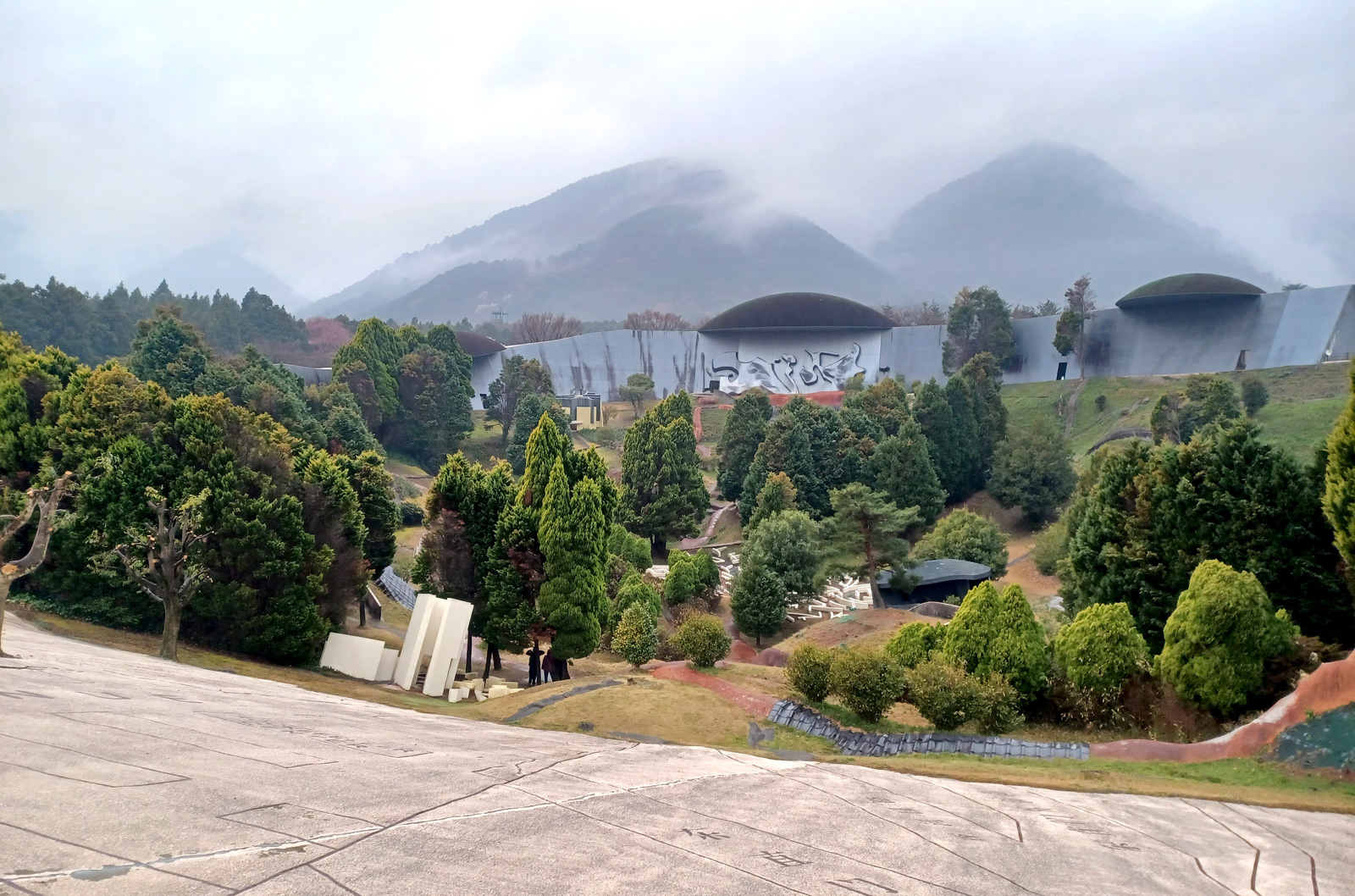
The park operated differently on us. It offered no time for hypervision. The park is composed of uneven, brightly colored terrain shaped by steep slopes, sudden inclines, domes, narrow passages, and unstable-looking platforms. Large abstract architectural forms are scattered across the site, requiring constant recalibration of balance and orientation as the ground tilts, rises, and folds beneath the body. In this environment, perception was immediately dispersed across the site. We were looking all over its surface, running hungrily for more. Our eyes led the way into this haptic planet unknown to earthlings and their way of moving. Stumble upon stumble, bodies met to form a body, yet consensus was never reached. We felt like observers of bodies deciding how I was to be my I. Walking on the sky, my eyes touched the softness of that concrete surface, rich with the pastness of grass and rubber. Eyes led but are deceitful; they tell you one thing, but surfaces feel differently. Once again, bodies conflict. Let me tell you, the journey to consciousness is never a straight one; it more closely follows the multiplicity of a forest. Slip upon slip, potential tracks are too many to follow, but can one ever truly say they haven’t taken them all simultaneously on this planet of unknowns? We are here, and there, and where, and there, and there, and where and here. Affects fall like rain, leaving us soaked in inseparability. Arakawa and Gins’ architecture against death rings true; one visit to the park and we erupted into hundreds of little particles, each with its own future to be planted on the planet of unknowns. Into which textures will they grow?
Figure 1: The Site of Reversible Destiny (1995) by Gins and Arakawa. Photo: shy*play.
Our visit to Arakawa and Gins’ park was extraordinary. We often say that this visit truly reminded us that we were ALIVE! Just as with the noren, autistic perception made itself felt strongly but in a very different way compared to our experiences with the noren. The process of seeing action was swift, like a chef rapidly chopping vegetables: tak, tak, tak, tak, tak, tak, without the same pause between cuts, yet the actions did not come with categorization. The actions were devoid of instrumental intention; they were rather for the sake of creative exploration without a specific goal, purely for the art of it. It took the form of an improvisational dance between bodies and the park. It was a true haven for desire. We found ourselves roaming, running, moving on all four, stumbling, falling, touching, caressing, looking upwards, sideways, legs leading, heads tilting back, arms journeying one way and legs another. We felt as though our bodies were not obeying a singular desire; instead, desire drifted in every direction, with each part of us yearning to follow its own unique path. This is not to say that all our senses worked independently. On the contrary, they all worked together synesthetically but not in harmony; we strongly felt the different desires that were flowing and waiting for recognition. The park was the absolute embodiment of an architecture in a continuous process of becoming. The events were perishing quickly, and we kept perceiving the park in new and different ways, noticeably too fast and complex for consciousness.
What makes the norm assume that action or movement is directed by the human subject? Or that the act or movement is a product of the self? As experienced in the park, much of the action occurs in a time before and alongside consciousness, yet still in relation to it. The notion that movement belongs to a subject—the self in total control—is an internalized illusion taught to us from a very young age by neurotypicality. Arakawa and Gins (2002) concur when they assert that most of us “register numb”. By this, they mean that most of us move without truly thinking or feeling. To achieve this, one must suppress the layered milieu, much like chunking, which usually occurs very quickly, without conscious thinking ever being aware of it. Thus, when we say neurotypicality taught us, it is not merely an utterance; most of Western architecture is built to facilitate that numbness, as many bodyminds follow deeply habituated routes. Consider how most people enter a classroom or a restaurant, to bring up a familiar example: they sit. “We move with our presupposed bodies in an existing space,” neurotypicality would claim. Such bodies rely unthinkingly on their proprioceptive sense, “the body’s awareness of its location, posture, and movement, enabled by receptors distributed throughout the skin, muscles, tendons, and joints” (Lupton and Lipps 2018, 4). Beyond its biological aspect, as Manning (2013) writes, proprioception also “provides us with clues that precede our [...] understanding of where we are going. [It is] feeling with, immediately linked to our sense of balance, to our ability to space” (49).
But proprioception informed by neurodiversity works differently, according to artist and writer Esté Klar (2020): “Neurodiverse proprioception moves the body within space I will come to understand as ‘the room.’ The room is defined as my body + the environment, where the environment is an atmospheric body” (23–24). The space and body arise with movement rather than being defined prior to their relation. Our experience at the park echoes Klar’s perspective on this. Our movement in the park was partly led by proprioception; it involved seeing the tactile quality of the rubber floor, which tingled in our feet and propelled our legs to move toward it at a speed we didn’t know we were capable of. But it was also the sensation of our bodies being fragmented, pulling and pushing in all directions, with legs, arms, and heads in a struggle for their recognized desires. More than that, it was the ability to still feel as a body, however fragmented. This experience of the atmospheric body, not self-contained but a productive operation, is intentional here, producing what Arakawa and Gins (2002) call the “architectural body”: an intermingling of bodies and surroundings taking shape together.
Bodies and spaces always emerge anew, even if, for neurotypicals, newness may often feel like the same due to a tendency to chunk quickly and take the chunk as supposedly natural. Neurodiverse bodyminds, however, keep reminding us that relation is always primary. Let us read Mel Baggs to further demonstrate this point:
I was pouring water from a large bucket, onto an electric fence. I slowly realized something was different—no, bad—no, very bad—and hang on, it seems to be in the vicinity. And colored bright white, and &e oh yeah, painful, and pain has something to do with my body (???), yeah it does, but where on my body, …, …, …, …, …, arm. My arm is a part of me. Let me turn my eyes on. Now look at my arm. Stuff on my arm. Stuff… water. Where is the water going? Fence. Electric… oh. Better stop this. Where’s the arm again? Got to move it. (Wait for those instructions to mosey down into my arm.) There. Phew. (Baggs 2010b)
For many neurodivergent bodyminds, including ours, spaces—even when neurotypically built to register numb—often feel too busy. Feeling numb is a capability many of us do not possess, which can be frustrating given the omnipresence of neurotypical spaces and their ‘correct’ handling. A diversity of techniques is adopted by different neurodivergent bodyminds to continue participating in these environments, even when our participation often leads to punishment and life-threatening situations. Adam Wolfond writes about one of his techniques, which involves stimming with “non-human facilitators” (Klar 2020, 57) when the visual field becomes too busy. He writes:
I am arranging the open way with starting support. I am arranging slanting space so that I am always easy average walks of calm. I want the slanting space to see and really keep balance. The space is always pacing too fast and having the stick thinks about how I can move social gaming like everyone else. I am also fast so I need to easy walk with a stick. (Wolfond as quoted by Klar 2020, 47)
The park did not conform to the neurotypical will. On the contrary, it was built with the intention of making the bodying process feel strongly anew each time and, more importantly, directed at asking how the bodying process can be actualized differently. If neurotypical spaces demand habitual perception and action, the park asks what else is possible in seeing, movement, and spacing. There are no rules of participation, and correctness is not part of the park’s vocabulary. Our bodies accentuated a fast-paced, hungry need for physical movement, scattered and all over the place, but other bodyminds also danced with the park yet differently. We witnessed some people moving very slowly, inspecting the images and sensory experiences the park enabled with its rich array of textures, colors, patterns, and shapes. Furthermore, the park’s yearning for newness is underscored by the indeterminacy of its structures—these constructions and centers—which often appear as points of attraction, popping up like trees on alien ground. Yet once reached, they don’t provide a conclusion or plain category of what they are or how they must be handled. Instead, they remain within the pool of possibilities, making encounters with them and their relation to other elements of the park always a new world that leaks into all different kinds of narratives.
Conditions for forming differently, as with Arakawa and Gins’ park, do not imply an “anything goes” approach. One must craft these conditions carefully to prevent the encroachment of habit upon the processes of formation. Arakawa and Gins understood this well, and it is evident throughout the park. Consider one compositional element: the intertwining paths. Omnipresent, they lead to various structures, yet fluidly dissolve into other paths, and then into still more. They understood that paths enable movement, especially when there is a recognition of some sort of structure that a path can lead to. However, just as the structures invite direct perception, so do the paths. While they function as possible routes through the park, their purpose exceeds mere passage due to their nuanced conditioning. Constructed from diverse materials, these paths tease the senses—where sight suggests one reality, touch unveils another. They refuse rectilinearity; instead, they undulate—ascending and descending—rendering the journey a tangible, immersive experience, transforming mere passage into an act of worlding. The paths’ conditions also invite a shift in action, leading, as in our case, to a pluralism of desire. We partly understood these conditions as the repetition of materials, which recur in both paths and structures, yet invariably in unique combinations, serving distinct formal and compositional purposes. In this way, both pastness and futurity are strongly felt in their non-linearity. And that is not to mention the persistent desire to deviate from the paths, as they never seem to lead exactly where one initially wanted to go. Indeed, the desire for directionality is constantly redirecting itself, and in some ways, the paths themselves are to blame—a generative blame, we should add.
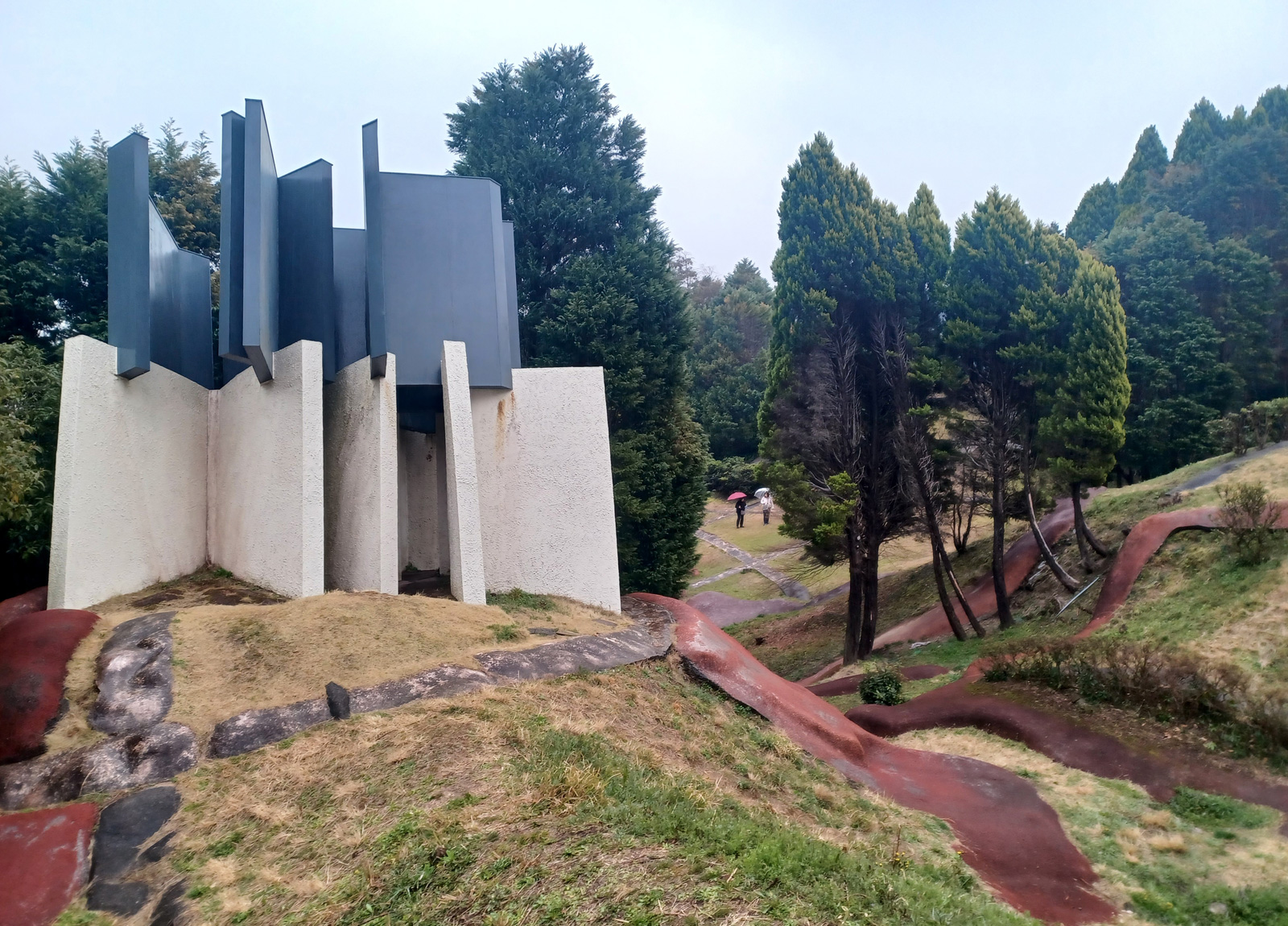
Figure 2: The Site of Reversible Destiny (1995) by Gins and Arakawa. Photo: shy*play.
For the culmination of our one-month-long residency, we aimed to construct a dialogue between worlds in which a group of local participants, primarily artists, attended and took part. The workshop sought to facilitate dialogue as an encounter between worlds in-formed by neurodiversity, in part through the creation of a mobile architecture in which perception, body, and space could be strongly felt in their co-formation. This mobile architecture would provoke an awakened registering and the accommodation of difference at the level of the precategorical. And so, we embarked on this journey of creating conditions for a mobile architecture, first by collecting papers with various textures and beginning work on an installation for neurodiverse dialoguing.
This installation became a constellation of paper sculptures with various performances: they acted as thresholds for bodies and perception, as objects inviting the alteration of physicality and the fragmentation of bodies, as hiding spots, and as wind-sensitive flappers. From the outset, it was built to deny any central point—particularly in relation to making the face the focal point of dialogue. More often than not, the sculptures directed perception to other parts of the human; legs and feet, for instance, frequently became what the eyes would meet.
The centrality of an architecture with objects that insinuate habituated directedness—remember the example of a restaurant—was equally disturbed. Yet that is not to say it lacked all sense of direction. As we learned from the paths at the Site of Reversible Destiny, conditions must birth some kind of direction(s), but without finalizing them into a fixed architecture or reducing bodies to what they already are, as opposed to what they can do. The sculptures invited perception, amongst other things, to see the thresholds as strongly imbued with the desire for passaging. We think it worked especially well in this context, as participants saw in them norens—albeit weird ones—something that would culturally perform differently in, for example, the Netherlands. However, this passaging never materialized into the entering of a coded room as it might in a restaurant; instead, it was followed by the potential for further moments of passaging, each one leading to another noren. The space was constructed precisely as a space of passaging—a space that foregrounded processuality and the continuous re-forming of space and bodies.
The passaging was also felt in a different key. The sculptures carried other directionalities as well, embodying qualitative conditions that encouraged synesthesia through their intricate patterns, textures, lights and shadows, movements and rhythms. We often heard from participants that the sculptures tasted like different flavors of candy, while others spoke about how the movement and the rhythms of the sculptures created music. Some participants even described seeing the patterns and textures of the sculptures moving in ways that could not be attributed to movement from the wind. We should not mistake this for hallucination; rather it is the production of an aesthetic experience arising in the relational, the inbetweenness, of senses in co-operation and the conditions of emergence previously discussed—there is no objective world simply waiting to be seen out there. In other words, the relational field presupposes synesthesia: synesthetic articulations offer insights into the relational field, as most people are habituated to perceive in ways as to background this field. Thus, owing to these strong synesthetic conditions, participants also felt a directedness of passaging in perception that did not necessitate the crossing of a physical threshold—a passaging of the senses, if you will.
The installation was set up in the living room of a villa where we stayed during our residency. This was important to us, as we wanted to avoid the strictness of a gallery or art space. We felt that the living room would support our intention of creating a mobile architecture, especially in the context of Japan, where tatami rooms are ubiquitous in living spaces—particularly in more traditional settings. These rooms are often kept largely free of furniture, allowing the space itself to remain open and continuously adaptable for reorganization.
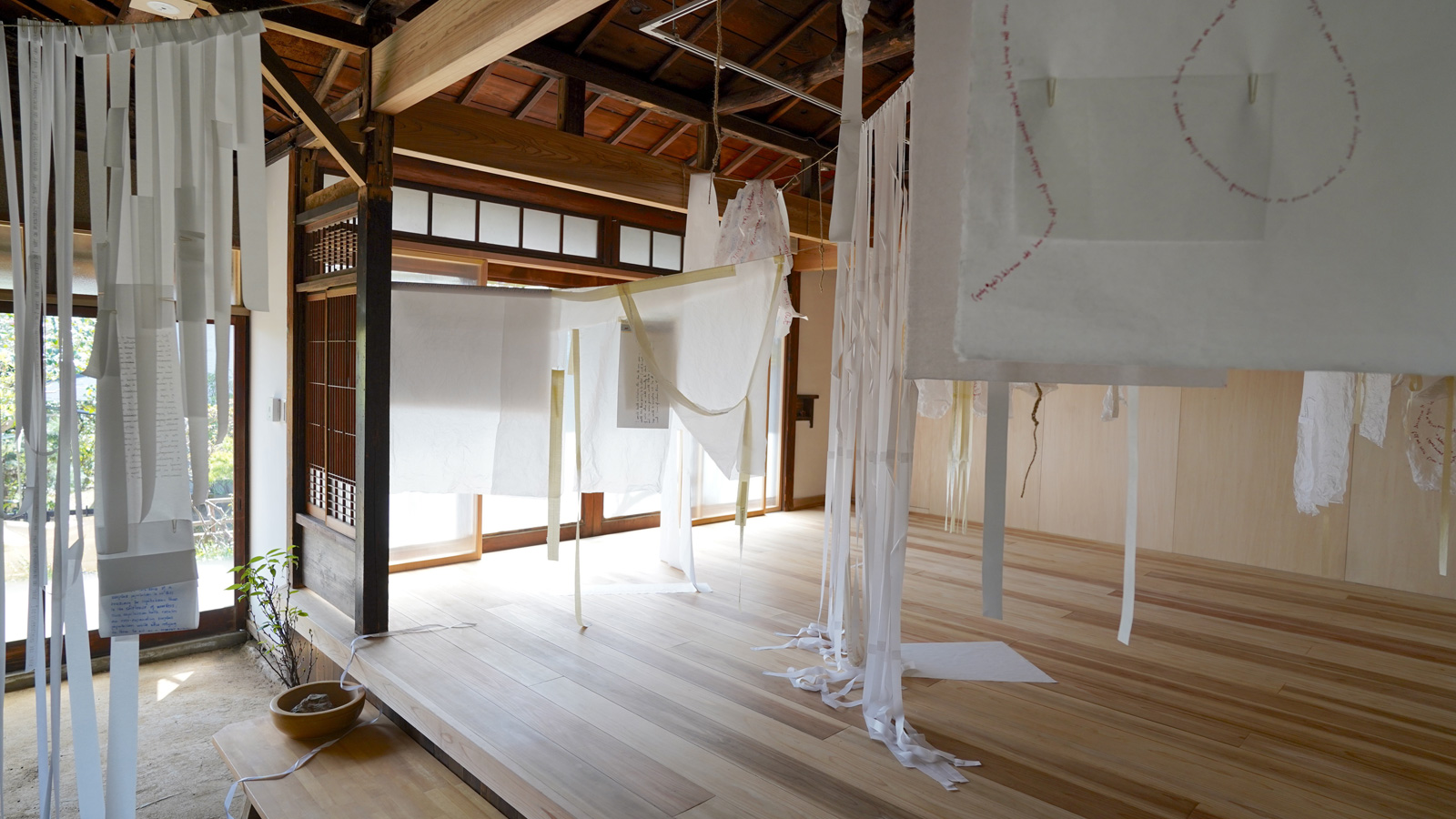
Figure 3: Experiments for Neurodiverse Futurities (2024) by shy*play. Photo: shy*play.
The arrival in the space was marked by a sense of participation, with all the directionalities previously mentioned being enacted. Yet, we also found it necessary to include language within the mobile architecture as a dialogue. But could we approach language with the same processual attitude we applied to the other components of the installation? This is especially challenging, as language tends to abstract by placing itself outside the event itself, often with the arrogance of assuming it knows all. Henri Bergson ([1907] 1998) argues that this tendency in language supports the idea of the intellect as a form of knowledge that has mastered understanding from an external standpoint. It is capable only of representational language and is obsessed with categorizing an infinity of objects in the world according to abstract and formal knowledge—universalization, generalization, division, etc. “In the oversight of language there is the mistake illusion of always calling things the same but things are always alive” (Wolfond as quoted by Klar 2020, 38). This is the language of chunking— non-sensuous and abstracted, detached from the relational field and capable of operating only through separability: the kind of language that neurotypicality alone deems legible.
However, representational language is not the only function language can perform; many writers, amongst them neurodivergent writers and especially autistic writers, have shown us otherwise. Ralph James Savarese (2012) writes about a relational language found in many autistic writers—a language that is not only environmental, but also processual and sensuous in its wording. He calls this modality of writing “autie-type”, which he describes as a genre in its own right, deeply relational in both its thinking and communication. The published writings of Adam Wolfond (2022, 2023), Tito Rajarshi Mukhopadhyay (2015, 2021), Imane Boukaila (2024), Naoki Higashida (2017), to name just a few, are perfect examples of this.
Manning describes these language performances as a certain form of poetics. She writes:
In the poetic language of classical autism, language is a sensing practice in its own right—a field of affective tonality activated in rhythms and tones, in speeds and intensities. Here, the turn toward expression does not cut itself off from the experiential vastness of sensation and perception but writes with them. (Manning 2013, 156).
This is a writing with the world, in the world, in the time of the event as unparsed, when one is the whole world. Our ongoing engagement with this poetics over the years has shown that reading such language and its “prearticulations” (Manning 2013, 167)—with its rhythms, its quietness, its jumps in register—is itself a highly sensory experience, imbued with movement, affect, and synesthetic articulation. It is not detached from understanding, but playfully moves alongside it, in a relationship that is fluid and undulating.
The following poem by autistic writer Tito Mukhopadhyay moves within this poetics. It does not illustrate the above argument, but performs it—where language remains entangled with rhythm, affect, and perception as the encounter with the event of the poem unfolds.
Clouds born again Sky—their sagging cradle,
Mist curtained, the sonorous drizzleSagging clouds swung the cradle.
Something almost said to a metallic town in silver drizzle,
“The light looks dead!”Something almost said— houses listened; cars blurred with powdery rain. “
The shops looked dead!”
The smudged outlines of headlights shimmered.Floating on reflections, cars blurred,
The clouds and streets refracted.
Shimmering lampposts silvered,
Visually displaced. (Mukhopadhyay 2021, 79–80)
Apart from the fact that many of these aforementioned writers produce brilliant work—as demonstrated in the above example, and which should be attributed to their qualities as writers—their writing also seems to be linked to their unique way of perceiving, which, following Manning, we have called “autistic perception.” They write from within that mode of perception, when forming is in its midst and everything is connected. This is often expressed through metaphor.
Autie-type is often seen at the heart of metaphorical thinking, aligning one sensation with another to enhance the experience of both simultaneously—a passaging of the senses. As poet Chris Martin (2022) discloses, “The expression of this doubleness, this deepening into the multiplicity of experience, might well have formed the soil from which poetry sprang” (54). The metaphorical thinking we are alluding to is not at a representational level, where preexisting concepts are put together; rather, the connections occur precategorially, in a realm where amodality reigns. Savarese is precise in his writing on this:
The choice of metaphoric vehicles is striking; notice how disparate the things compared are. One might be tempted to accuse this Autie of engaging in mixed metaphors, so quickly do the analogies, both implicit and explicit, come. But the point seem to be a world reconnected, a world included, on the level of sensory perception. (Savarese as quoted by Manning 2013, 158)
In the construction of the installation, then, we worked processually to approach language as we would any other component, albeit with its own singularities—treating it as material, as rhythmic, as form, etc. We were keen to avoid the paper becoming merely a surface for language. To this end, we collected poems by neurodivergent writers addressing topics such as time, perception, language, the medical system, as well also our own poems, and began sculpting, spacing, and installing.
Words and sentences received snake-like curves, travelling on, through, and in the sculptures, reaching their many crevices. The serpentine curves of the words worked compositionally with the verticality of the floating papers and the horizontality of the cords. As viewers moved among the sculptures, these curving paths invited thinking that unfolded in the movement of the body, in affect, and in conscious awareness—three modes of thought that existed in relation, shaped by one’s shifting position among the forms. Meaning was not absent, nor was it separated from all the other movement.
At one point in the workshop, as all participants encountered the installation from multiple directions, we contextualized the workshop as a neurodiverse dialogue—much as we have done in this essay, though more briefly—and invited everyone, if they wished, to physically alter the installation. We had brought many utensils for this purpose, which also partly guided possible forms of engagement. We made sure to emphasize that this invitation was not a prerequisite for participation; we considered everything participants had already been doing up to that point as meaningful participation in itself.
________ink followed ant
ant took time to walk through floating paper strings
eye and brush followed ant
ant followed movement
movement followed hand
hand with elongated paper fingers that touched some human fingers
across the room
paper strings and forms and fingers and membranes and space reaching out
like everything is reaching out
like all things are reaching out
like nothings are reaching out
_________________ant goes far
brush follows breeze then
paper membrane says fffsssss
a bunch of humans also here
with few words
of those typical words
but hey!
who said the words were few?
who measures what measures???
paper
elongation
arriving
passing
___________paper strings
stringing through and around
breeze coming and going
reaching in and out
as the languaging
that makes us all
somehow
not only
___if only
full full full full of meaningless meaninging
words passed underneath ant’s elegant walking
they were
and will be
tending towards
___________the words
and the feeling
There is a tendency in participatory art to place the human at the center of participation. But we resist this tendency, seeking instead to approach the dialogue ecologically—valuing the human as well as the more-than human. Besides the participatory directionalities already discussed, an ecological participation was also foregrounded by the way all the sculptures, because of their thin paper, would move when someone passed by, when wind entered from outside, or as the sun shifted, changing the lights and shadows so that the whole composition of the installation transformed, creating different spaces within spaces. In this processual constellation, agency does not belong solely to humans but operates in the in-betweenness of forming entities; agency, in this regard, must be understood as co-constitutive.
Our proposal for this dialogue was not to start from identities or preconceived groups, but to begin with the relational—and to explore what the relational can do when conditions are set to test its potentialities. This dialogue was intentionally designed to try to make space for new modes of existence to be invented, for new socialities to emerge. It was an answer to Wynter’s call for writing new stories. After all, how can we not regard autistic perception, bodying, autie-type, and worlding as forms of participation, as relations of “agencying” (Massumi 2024)? To grant agency exclusively to formed (human) subjects is perhaps the most oppressive gesture of neurotypical thinking.
Our neurodiverse perspective adopted a conception of writing not only through language, but with the many other languages that always operate in connection. Storying ecologically.
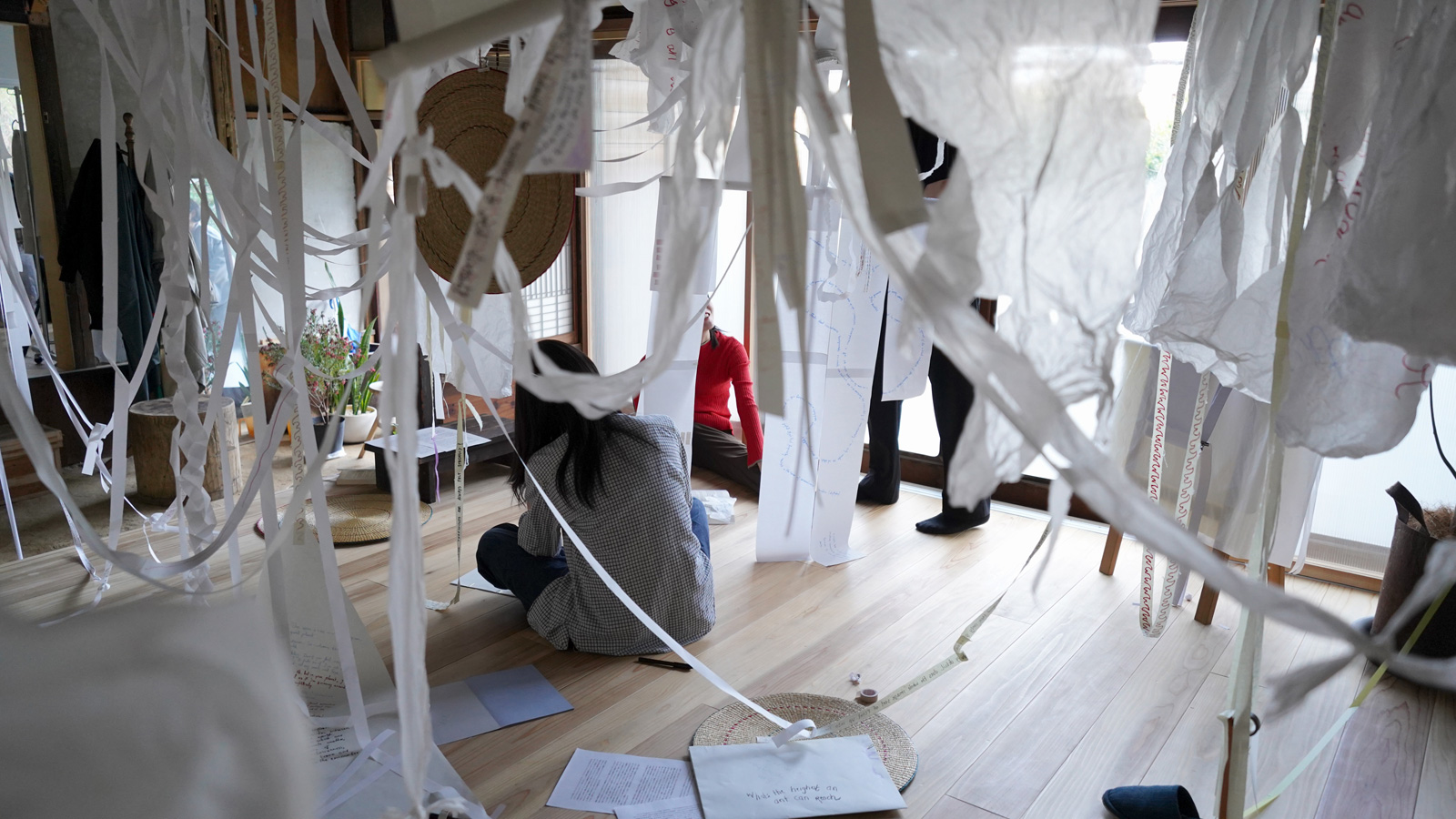
Figure 4: Experiments for Neurodiverse Futurities (2024) by shy*play. Photo: shy*play.
Arakawa, Shusaku, and Madeline Gins. 2002. Architectural Body. University of Alabama Press.
Baggs, Mel. 2010a. “The Fireworks Are Interesting.” Accessed 8 August 2025. https://ballastexistenz.wordpress.com/2010/03/05/the-fireworks-are-interesting/.
Baggs, Mel. 2010b. “The Summer Thing.” Accessed 8 August 2025. https://ballastexistenz.wordpress.com/2010/02/20/the-summer-thing/.
Bergson, Henri. (1907) 1998. Creative Evolution. Translated by Arthur Mitchell. Dover.
Boukaila, Imane. 2024. Tressing Motions at the Edge of Mistakes. Milkweed Editions.
Campt, Tina M. 2017. Listening to Images. Duke University Press. https://doi.org/10.2307/j.ctv1134dm3.
Chapman, Robert. 2023. Empire of Normality: Neurodiversity and Capitalism. Pluto Press. https://doi.org/10.2307/jj.8501594.
Emerson, Hannah. 2022. The Kissing of Kissing: Poems. Milkweed Editions.
Higashida, Naoki. 2017. Fall Down 7 Times Get Up 8: A Young Man’s Voice from the Silence of Autism. Random House.
Hilton, Leon J. 2025. Counter-Cartographies: Neurodivergence and the Errancies of Performance. University of Minnesota Press.
James, Williams. (1908) 1996. A Pluralistic Universe. University of Nebraska Press.
Klar, Esté. 2020. “Neurodiversity in Relation: An Artistic Intraethnography.” PhD diss., York University.
Lupton, Ellen, and Andrea Lipps. 2018. The Senses: Design Beyond Vision. Princeton Architectural Press.
Manning, Erin. 2013. Always More Than One: Individuation’s Dance. Duke University Press. https://doi.org/10.2307/j.ctv11smsmz.
Manning, Erin. 2016. The Minor Gesture. Duke University Press. https://doi.org/10.2307/j.ctv111jhg1.
Manning, Erin. 2020. For a Pragmatics of the Useless. Duke University Press. https://doi.org/10.1215/9781478012597.
Martin, Chris. 2022. May Tomorrow Be Awake: On Poetry, Autism, and Our Neurodiverse Future. HarperOne.
Masuda, Tadashi. 1989. The Design Heritage of Noren: Traditional Japanese Store-Front Art. Graphic-sha Publishing.
Massumi, Brian. 2013. Semblance and Event: Activist Philosophy and the Occurent Arts. The MIT Press.
Massumi, Brian. 2017. The Principle of Unrest: Activist Philosophy in the Expanded Field. Open Humanities Press. https://doi.org/10.26530/OAPEN_630732.
Massumi, Brian. 2024. The Personality of Power: A Theory of Fascism for Anti-Fascist Life. Duke University Press https://doi.org/10.1353/book.134241.
Mukhopadhyay, Tito Rajarshi. 2015. Plankton Dreams: What I Learned in Special-Ed. Open Humanities Press.
Mukhopadhyay, Tito Rajarshi. 2021. Teaching Myself To See. Punctum Books. https://doi.org/10.2307/jj.2353788.
Oliver, Mike. 1990. The Politics of Disablement. Macmillan Education. https://doi.org/10.1007/978-1-349-20895-1.
Savarese, Ralph James. 2012. “Gobs and Gobs of Metaphor: Dynamic Relation and Classical Autist’s Typed Massage.” INFLeXions 5 (Gilbert Simondon): 185–224. https://www.inflexions.org/n5_t_savaresehtml.html.
Savransky, Martin. 2021. Around the Day in Eighty Worlds: Politics of the Pluriverse. Duke University Press. https://doi.org/10.1215/9781478021438.
Silberman, Steve. 2015. Neurotribes: The Legacy of Autism and How to Think Smarter About People Who Think Differently. Allen & Unwin.
Walker, Nick. 2021. Neuroqueer Heresies: Notes on the Neurodiversity Paradigm, Autistic Empowerment, and Postnormal Possibilities. Autonomous Press.
Williams, Donna. 1998. Autism and Sensing: The Unlost Instinct. Jessica Kingley.
Wolfond, Adam. 2022. The Wanting Way: Poems (Multiverse). Milkweed Editions.
Wolfond Adam. 2023. Open Book in Ways of Water. Punctum Books. https://doi.org/10.53288/0454.1.00.
Wynter, Sylvia. 2003. “Unsettling the Coloniality of Being/Power/Truth/Freedom: Towards the Human, After Man, Its Overrepresentation—An Argument.” CR: The New Centennial Review 3 (3): 257–337. https://doi.org/10.1353/ncr.2004.0015.
Yergeau, Remi M. 2018. Authoring Autism: On Rhetoric and Neurological Queerness. Duke University Press. https://doi.org/10.1215/9780822372189.
Aion Arribas (they/them) is a movement artist, transdisciplinary researcher and teacher. They obtained a bachelor’s degree in Graphic Design from Escuela Numero 10 in Madrid, a second bachelor’s degree in Choreography from SNDO in Amsterdam, and a master’s degree in Fine Arts and Design from KABK in The Hague. Their work dances in between questions of embodiment and bodying, the interplay of creation with auto-theory, and the advancement of a neurodiversity paradigm through creative practices. Along with antje nestel, they co-created shy*play, a collective focused on doing neurodiversity as a relational practice in difference. shy*play is also a project hosted by the Research Lectorate of the Academy of Theater and Dance in Amsterdam (DAS Research) and a THIRD fellow 2024–2026 of the same department.
antje nestel (they/them) is an artist, a teacher, a facilitator of participatory events. They obtained a bachelor’s degree in fine art from Gerrit Rietveld Academy and a research master’s degree in Media, Art and Performance at Utrecht University. antje was also a participant at De ateliers in Amsterdam. Together with Aion Arribas, they have created a collective named shy*play, that focuses on exploring with neurodiversity not as a process of explanation, but as a relational practice in difference. shy*play is also a project hosted by the Research Lectorate of the Academy of Theatre and Dance in Amsterdam (DAS Research) and a THIRD fellow 2024–2026 of the same department.
© 2025 Aion Arribas and antje nestel
Except where otherwise noted, this work is licensed under a Creative Commons Attribution-NonCommercial-ShareAlike 4.0 International License.